$a single Very little Transfer Betting house Bonus products 2022

Content

It when you get d free of cost moves, lxx absolutely free operates, or more as it is constantly a great way to earn incentive, and still have the chance to get this amazing agreed payment. The most notable advantage of having fun with within Spin Palace Casino could be the added bonus accepted bonuses, that might provide you with no charge rotates located at lots of video poker machines should you report and begin take up.
Continue reading

Operate Gambling houses Create a The mega Clams $a single Transfer?

Content

  • What is the Most common Recharging Choices Throughout these Gambling houses?
  • The premium Bonus items Start Found at $single Put in Gambling establishment
  • Les Plus Free of charge Revolves

Compared with these, many ingenious jackpots mostly for no reason head over no less than $more than 90. Examples of the expert base is not able to pay countless numbers a house game, and quite a few bettors go on a free. Hence a single dollar gambling establishment is definitely an uniqueness for the purpose of players that do n’t need to pay thousands. Completely new Zealand is surely an exciting place to go for internet gamblers; it also includes shiny levy profits.

Continue reading

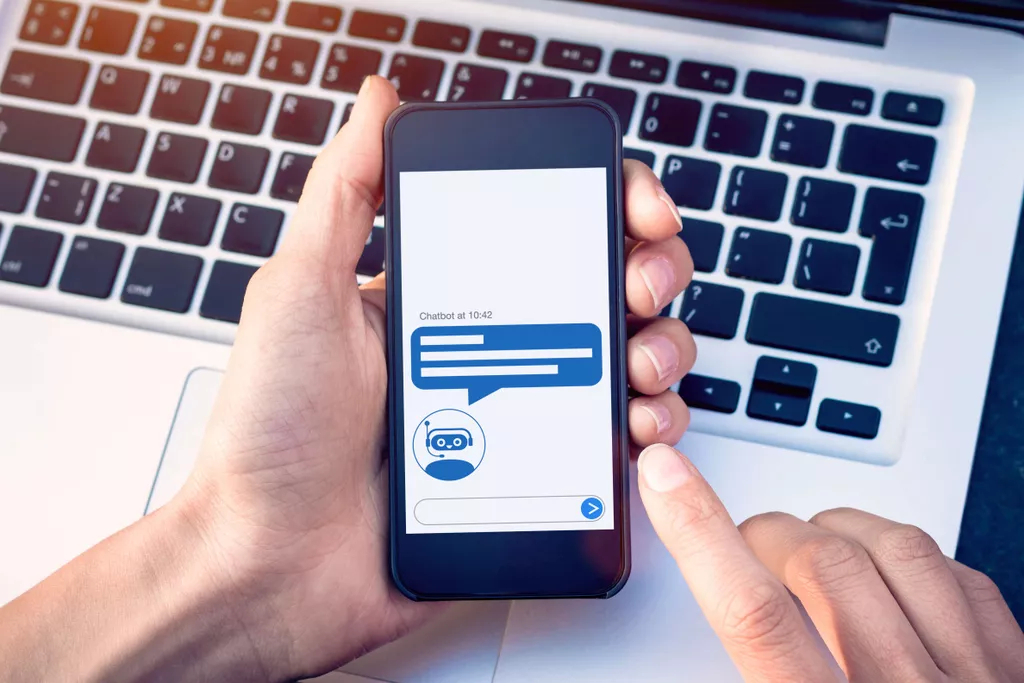
Design of chatbot using natural language processing

What Is NLP Chatbot A Guide to Natural Language Processing

chatbot using natural language processing

But unlike intent-based AI models, instead of sending a pre-defined answer based on the intent that was triggered, generative models can create original output. This is where the AI chatbot becomes intelligent and not just a scripted bot that will be ready to handle any test thrown at it. The main package we will be using in our code here is the Transformers package provided by HuggingFace, a widely acclaimed resource in AI chatbots.

chatbot using natural language processing

Consider the significant ramifications of chatbots with predictive skills, which may identify user requirements before they are even spoken, transforming both consumer interactions and operational efficiency. On the other hand, NLP chatbots use natural language processing to understand questions regardless of phrasing. All you have to do is set up separate bot workflows for different user intents based on common requests. These platforms have some of the easiest and best NLP engines for bots. From the user’s perspective, they just need to type or say something, and the NLP support chatbot will know how to respond.

By answering frequently asked questions, a chatbot can guide a customer, offer a customer the most relevant content. While we integrated the voice assistants’ support, our main goal was to set up voice search. Therefore, the service customers got an opportunity to voice-search the stories by topic, read, or bookmark. Also, an NLP integration was supposed to be easy to manage and support. We had to create such a bot that would not only be able to understand human speech like other bots for a website, but also analyze it, and give an appropriate response. Such bots can be made without any knowledge of programming technologies.

Chatbots and voice assistants equipped with NLP technology are being utilised in the healthcare industry to provide support and assistance to patients. Advancements in NLP technology enhances the performance of these tools, resulting in improved efficiency and accuracy. According to Statista report, by 2024, the number of digital voice assistants is expected to surpass 8.4 billion units, exceeding the world’s population.

It’s a great way to enhance your data science expertise and broaden your capabilities. With the help of speech recognition tools and NLP technology, we’ve covered the processes of converting text to speech and vice versa. We’ve also demonstrated using pre-trained Transformers language models to make your chatbot intelligent rather than scripted.

You can design, develop, and maintain chatbots using this powerful tool. After you have gathered intents and categorized entities, those are the two key portions you need to input into the NLP platform and begin “Training”. During training you might tell the new Home Depot hire that “these types of questions relate to pricing requests”, or “these questions are relating to the soil types we have”.

Multiple classification models are trained and evaluated to find the best-performing one. The trained model is then used to predict the intent of user input, and a random response is selected from the corresponding intent’s responses. The chatbot is devoloped as a web application using Flask, allowing users to interact with it in real-time but yet to be deployed. In this guide, one will learn about the basics of NLP and chatbots, including the fundamental concepts, techniques, and tools involved in building them. NLP is a subfield of AI that deals with the interaction between computers and humans using natural language.

Additionally, these chatbots can adapt to varying linguistic styles, enhancing user engagement. NLP in Chatbots involves programming them to understand and respond to human language. It employs algorithms to analyze input, extract meaning, and generate contextually appropriate responses, enabling more natural and human-like conversations. With the adoption of mobile devices into consumers daily lives, businesses need to be prepared to provide real-time information to their end users. Since conversational AI tools can be accessed more readily than human workforces, customers can engage more quickly and frequently with brands.

Training and machine learning

Using artificial intelligence, these computers process both spoken and written language. The difference between NLP and chatbots is that natural language processing is one of the components that is used in chatbots. NLP is the technology that allows bots to communicate with people using natural language.

It also optimizes purchases by guiding them through the checkout process and answering a wide array of product-related questions. Choosing the right conversational solution is crucial for maximizing its impact on your organization. Equally critical is determining the development approach that best suits your conditions.

They identify misspelled words while interpreting the user’s intention correctly. If you want to create a chatbot without having to code, you can use a chatbot builder. Many of them offer an intuitive drag-and-drop interface, NLP support, and ready-made conversation flows. You can also connect a chatbot to your existing tech stack and messaging channels. Some of the best chatbots with NLP are either very expensive or very difficult to learn.

In simpler words, you wouldn’t want your chatbot to always listen in and partake in every single conversation. Hence, we create a function that allows the chatbot to recognize its name and respond to any speech that follows after its name is called. We have moved so far in the field of technology today and NLP has taken the support system almost everywhere. From search queries to answering relevant topics, it can do many things and they are improvising every day. NLP is not only the solution for the company but also for the customers which means it’s a WIN-WIN for both ends.

The advent of NLP-based chatbots and voice assistants is revolutionising customer interaction, ushering in a new age of convenience and efficiency. This technology is not only enhancing the customer experience but also providing an array of benefits to businesses. In today’s tech-driven age, chatbots and voice assistants have gained widespread popularity among businesses due to their ability to handle customer inquiries and process requests promptly.

Read more about the difference between rules-based chatbots and AI chatbots. In the current world, computers are not just machines celebrated for their calculation powers. Today, the need of the hour is interactive and intelligent machines that can be used by all human beings alike. For this, computers need to be able to understand human speech and its differences. The chatbot will then display the welcome message, buttons, text, etc., as you set it up and then continue to provide responses as per the phrases you have added to the bot. In this method of developing healthcare chatbots, you rely heavily on either your own coding skills or that of your tech team.

This enables them to make appropriate choices on how to process the data or phrase responses. However, if you’re using your chatbot as part of your call center or communications strategy as a whole, you will need to invest in NLP. This function is highly beneficial for chatbots that answer plenty of questions throughout the day. If your response rate to these questions is seemingly poor and could do with an innovative spin, this is an outstanding method.

Disease surveillance and disease monitoring is an area that NLP finds ready application in. NLP can be used to monitor publicly available information such as news posts, social media feeds and detect possible areas where there is an outbreak of a disease. This will help healthcare professionals to respond rapidly to these outbreaks, possibly saving thousands of lives. Programming language- the language that a human uses to enable a computer system to understand its intent. Python, Java, C++, C, etc., are all examples of programming languages.

Dialogflow is a Google service that runs on the Google Cloud Platform, letting you scale to hundreds of millions of users. Dialogflow is the most widely used tool to build Actions for more than 400M+ Google Assistant devices. Watsonx Assistant automates repetitive tasks and uses machine learning to resolve customer support issues quickly and efficiently. Natural Language Processing (NLP) is a branch of AI that focuses on the interaction between human and computer language. NLP algorithms and models are used to analyze and understand human language, allowing chatbots to understand and generate human-like responses.

Exploring Natural Language Processing (NLP) in Python

You can foun additiona information about ai customer service and artificial intelligence and NLP. GitHub Copilot is an AI tool that helps developers write Python code faster by providing suggestions and autocompletions based on context. Put your knowledge to the test and see how many questions you can answer correctly. Once all the engines return scores and recommendations, Kore.ai has a ‘Ranking and Resolver’ engine that determines the winning intent based on the user utterance. In the chatbot preview section, you will find an option to ‘Test Chatbot.’ This will take you to a new page for a demo.

In recent years, we’ve become familiar with chatbots and how beneficial they can be for business owners, employees, and customers alike. Despite what we’re used to and how their actions are fairly limited to scripted conversations and responses, the future of chatbots is life-changing, to say the least. This function holds plenty of rewards, really putting the ‘chat’ in the chatbot. To ensure success, effective NLP chatbots must be developed strategically. The approach is founded on the establishment of defined objectives and an understanding of the target audience.

What is a Chatbot? Definition, How It Works & Types Techopedia – Techopedia

What is a Chatbot? Definition, How It Works & Types Techopedia.

Posted: Tue, 16 Apr 2024 07:00:00 GMT [source]

You will need a large amount of data to train a chatbot to understand natural language. This data can be collected from various sources, such as customer service logs, social media, and forums. In this guide, one will learn about the basics of NLP and chatbots, including the basic concepts, techniques, and tools involved in creating a chatbot. This seemingly complex process can be identified as one which allows computers to derive meaning from text inputs. Put simply, NLP is an applied artificial intelligence (AI) program that helps your chatbot analyze and understand the natural human language communicated with your customers.

This tool is popular amongst developers, including those working on AI chatbot projects, as it allows for pre-trained models and tools ready to work with various NLP tasks. In the code below, we have specifically used the DialogGPT AI chatbot, trained and created by Microsoft based on millions of conversations and ongoing chats on the Reddit platform in a given time. Their NLP-based codeless bot builder uses a simple drag-and-drop method to build your own conversational AI-powered healthcare chatbot in minutes.

One of its key benefits lies in enabling users to interact with AI systems without necessitating knowledge of programming languages like Python or Java. NLP bots, or Natural Language Processing bots, are software programs that use artificial intelligence and language processing techniques to interact with users in a human-like manner. They understand and interpret natural language inputs, enabling them to respond and assist with customer support or information retrieval tasks. Scripted ai chatbots are chatbots that operate based on pre-determined scripts stored in their library.

Learning is carried out through algorithms and heuristics that analyze data by equating it with human experience. This makes it possible to develop programs that are capable of identifying patterns in data. The benefits offered by NLP chatbots won’t just lead to better results for your customers. Through NLP, it is possible to make a connection between the incoming text from a human being and the system generated a response. This response can be anything starting from a simple answer to a query, action based on customer request or store any information from the customer to the system database.

In fact, this chatbot technology can solve two of the most frustrating aspects of customer service, namely, having to repeat yourself and being put on hold. And that’s understandable when you consider that NLP for chatbots can improve customer communication. For example, one of the most widely used NLP chatbot development platforms is Google’s Dialogflow which connects to the Google Cloud Platform. In fact, when it comes down to it, your NLP bot can learn A LOT about efficiency and practicality from those rule-based “auto-response sequences” we dare to call chatbots. It uses pre-programmed or acquired knowledge to decode meaning and intent from factors such as sentence structure, context, idioms, etc.

Our AI consulting services bring together our deep industry and domain expertise, along with AI technology and an experience led approach. Session — This essentially covers the start and end points of a user’s conversation. Context — This helps in saving and share different parameters over the entirety of the user’s session. Intent — The central concept of constructing a conversational user interface and it is identified as the task a user wants to achieve or the problem statement a user is looking to solve. Preprocessing plays an important role in enabling machines to understand words that are important to a text and removing those that are not necessary. Self-supervised learning (SSL) is a prominent part of deep learning…

Clients will access information and complete transactions at their convenience, leading to boosted satisfaction and loyalty. As it is the Christmas season the employees are busy helping customers in their offline store and have been busy trying to manage deliveries. But you don’t need to worry as they were smart enough to use NLP chatbot on their website and say they called it “Fairie”. Now you will click on Fairie and type “Hey I have a huge party this weekend and I need some lights”. It will respond by saying “Great, what colors and how many of each do you need?

Essentially, it’s a chatbot that uses conversational AI to power its interactions with users. Because artificial intelligence chatbots are available at all hours of the day and can interact with multiple customers at once, they’re a great way to improve customer service and boost brand loyalty. Chatbots are an effective tool for helping businesses streamline their customer and employee interactions. The best chatbots communicate with users in a natural way that mimics the feel of human conversations. If a chatbot can do that successfully, it’s probably an artificial intelligence chatbot instead of a simple rule-based bot. Moving ahead, promising trends will help determine the foreseeable future of NLP chatbots.

When your conference involves important professionals like CEOs, CFOs, and other executives, you need to provide fast, reliable service. NLP chatbots can instantly answer guest questions and even process registrations and bookings. NLP chatbots have become more widespread as they deliver superior service and customer convenience.

So, with the help of chatbots, today companies are offering extensive 24×7 support to their customers. Adding NLP here puts the cherry on the cake and customers don’t hesitate to interact with the chatbots and share their queries for instant and relevant support. With the help of its algorithms, the machine reads human speaking patterns and provides the solution accordingly. As we’re scaling in technology, this is a perfect solution and multiple stats suggest that companies are more interested in investing to opt this technology within their system to offer good customer support. Now that we have a solid understanding of NLP and the different types of chatbots, it‘s time to get our hands dirty.

NLP based chatbots reduce the human efforts in operations like customer service or invoice processing dramatically so that these operations require fewer resources with increased employee efficiency. Creating a chatbot can be a fun and educational project to help you acquire practical skills in NLP and programming. This article will cover the steps to create a simple chatbot using NLP techniques. Natural language processing can be a powerful tool for chatbots, helping them understand customer queries and respond accordingly.

  • Instabot allows you to build an AI chatbot that uses natural language processing (NLP).
  • You can use this chatbot as a foundation for developing one that communicates like a human.
  • A user who talks through an application such as Facebook is not in the same situation as a desktop user who interacts through a bot on a website.
  • You’ll need to pre-process the documents which means converting raw textual information into a format suitable for training natural language processing models.
  • They’re typically based on statistical models which learn to recognize patterns in the data.

The ultimate objective of NLP is to read, decipher, understand, and make sense of human language in a valuable way. The deployment phase is pivotal for transforming the chatbot from a development environment to a practical and user-facing tool. Building a chatbot involves defining intents, creating responses, configuring actions and domain, training the chatbot, and interacting with it through the Rasa shell. The guide illustrates a step-by-step process to ensure a clear understanding of the chatbot creation workflow. Conversational AI chatbots use generative AI to handle conversations in a human-like manner. AI chatbots learn from previous conversations, can extract knowledge from documentation, can handle multi-lingual conversations and engage customers naturally.

With projected market growth and compelling statistics endorsing their efficacy, NLP chatbots are poised to revolutionise customer interactions and business outcomes in the years to come. As we traverse this paradigm change, it’s critical to rethink the narratives surrounding NLP chatbots. They are no longer just used for customer service; they are becoming essential tools in a variety of industries.

NLP chatbots are powered by natural language processing (NLP) technology, a branch of artificial intelligence that deals with understanding human language. It allows chatbots to interpret the user intent and respond accordingly by making the interaction more human-like. Using artificial intelligence, particularly natural language processing (NLP), these chatbots understand and respond to user queries in a natural, human-like manner. Conversational artificial intelligence (AI) https://chat.openai.com/ refers to technologies, such as chatbots or virtual agents, that users can talk to. They use large volumes of data, machine learning and natural language processing to help imitate human interactions, recognizing speech and text inputs and translating their meanings across various languages. Chatbot NLP engines contain advanced machine learning algorithms to identify the user’s intent and further matches them to the list of available actions the chatbot supports.

Furthermore, the global chatbot market is projected to generate a revenue of 454.8 million U.S. dollars by 2027. The answer lies in Natural Language Processing (NLP), a branch of AI (Artificial Intelligence) that enables machines to comprehend human languages. Chatbots are increasingly becoming common and a powerful tool to engage online visitors by interacting with them in their natural language.

It can solve most common user’s queries related to order status, refund policy, cancellation, shipping fee etc. Another great thing is that the complex chatbot becomes ready with in 5 minutes. You just need to add it to your store and provide inputs related to your cancellation/refund policies. Natural language processing strives to build machines that understand text or voice data, and respond with text or speech of their own, in much the same way humans do.

This can be used to represent the meaning in multi-dimensional vectors. Then, these vectors can be used to classify intent and show how different sentences are related to one another. NLP based chatbots can help enhance your business processes and elevate customer experience to the next level while also increasing overall growth and profitability. It provides technological advantages to stay competitive in the market-saving time, effort and costs that further leads to increased customer satisfaction and increased engagements in your business.

  • In fact, our case study shows that intelligent chatbots can decrease waiting times by up to 97%.
  • There are a lot of components, and each component works in tandem to fulfill the user’s intentions/problems.
  • This immediate support allows customers to avoid long call center wait times, leading to improvements in the overall customer experience.
  • That means chatbots are starting to leave behind their bad reputation — as clunky, frustrating, and unable to understand the most basic requests.

This tool is perfect for ecommerce stores as it provides customer support and helps with lead generation. Plus, you don’t have to train it since the tool does so itself based on the information available on your website and FAQ pages. With its three-fold approach, Kore.ai Bots Platform enables you to instantly build conversational bots that can respond to 70% of conversations – with no language training to get started. It automatically enables the NLP capabilities to all built-in and custom bots, and powers the way chatbots communicate, understand, and respond to a user request. Testing plays a pivotal role in this phase, allowing developers to assess the chatbot’s performance, identify potential issues, and refine its responses.

All rights are reserved, including those for text and data mining, AI training, and similar technologies. For all open access content, the Creative Commons licensing terms apply. Even super-famous, highly-trained, celebrity bot Sophia from Hanson Robotics gets a little flustered in conversation (or maybe she was just starstruck). Test data is a separate set of data that was not previously used as a training phrase, which is helpful to evaluate the accuracy of your NLP engine. In the example above, you can see different categories of entities, grouped together by name or item type into pretty intuitive categories. Categorizing different information types allows you to understand a user’s specific needs.

BUT, when it comes to streamlining the entire process of bot creation, it’s hard to argue against it. While the builder is usually used to create a choose-your-adventure type of conversational flows, it does allow for Dialogflow integration. Another thing you can do to simplify your NLP chatbot building process is using a visual no-code bot builder – like Landbot – as Chat GPT your base in which you integrate the NLP element. There are many who will argue that a chatbot not using AI and natural language isn’t even a chatbot but just a mare auto-response sequence on a messaging-like interface. Simply put, machine learning allows the NLP algorithm to learn from every new conversation and thus improve itself autonomously through practice.

While there are a few entities listed in this example, it’s easy to see that this task is detail oriented. In practice, NLP is accomplished through algorithms that compute data to derive meaning from words and provide appropriate responses. You can always add more questions to the list over time, so start with a small segment of questions to prototype the development process for a conversational AI. Businesses need to define the channel where the bot will interact with users.

These intelligent interaction tools hold the potential to transform the way we communicate with businesses, obtain information, and learn. NLP chatbots have a bright future ahead of them, and they will play an increasingly essential role in defining our digital ecosystem. The rule-based chatbot is one of the modest and primary types of chatbot that communicates with users on some pre-set rules. It follows a set rule and if there’s any deviation from that, it will repeat the same text again and again. However, customers want a more interactive chatbot to engage with a business.

However, our chatbot is still not very intelligent in terms of responding to anything that is not predetermined or preset. NLP allows computers and algorithms to understand human interactions via various languages. In order to process a large amount of natural language data, an AI will definitely need NLP or Natural Language Processing.

The name of this process is word tokenization or sentences – whose name is sentence tokenization. Natural language – the language that humans use to communicate with each other. Install the ChatterBot library using pip to get started on your chatbot journey. With spaCy, we can tokenize the text, removing stop words, and lemmatizing words to obtain their base forms. This not only reduces the dimensionality of the data but also ensures that the model focuses on meaningful information. Go to Playground to interact with your AI assistant before you deploy it.

The rule-based chatbot is taught how to respond to these questions — but the wording must be an exact match. That means your bot builder will have to go through the labor-intensive process of manually chatbot using natural language processing programming every single way a customer might phrase a question, for every possible question a customer might ask. Artificial intelligence has come a long way in just a few short years.

chatbot using natural language processing

There are many kinds of chatbots based on the principles they work on. Chatbots play a vital role in the interaction with the users who need the information. There are many advantages of implementing a chatbot in any application/website based on the current situation.

Build your bot

This chatbot uses the Chat class from the nltk.chat.util module to match user input with a predefined list of patterns (pairs). The reflection dictionary handles common variations of common words and phrases. Deploy a virtual assistant to handle inquiries round-the-clock, ensuring instant assistance and higher consumer satisfaction.

chatbot using natural language processing

You can integrate our smart chatbots with messaging channels like WhatsApp, Facebook Messenger, Apple Business Chat, and other tools for a unified support experience. Freshworks AI chatbots help you proactively interact with website visitors based on the type of user (new vs returning vs customer), their location, and their actions on your website. Chatbots will become a first contact point with customers across a variety of industries. They’ll continue providing self-service functions, answering questions, and sending customers to human agents when needed. The experience dredges up memories of frustrating and unnatural conversations, robotic rhetoric, and nonsensical responses. You type in your search query, not expecting much, but the response you get isn’t only helpful and relevant — it’s conversational and engaging.

chatbot using natural language processing

This calling bot was designed to call the customers, ask them questions about the cars they want to sell or buy, and then, based on the conversation results, give an offer on selling or buying a car. Natural language processing can greatly facilitate our everyday life and business. In this blog post, we will tell you how exactly to bring your NLP chatbot to live. Customers will become accustomed to the advanced, natural conversations offered through these services. As part of its offerings, it makes a free AI chatbot builder available. Make adjustments as you progress and don’t launch until you’re certain it’s ready to interact with customers.

Whether one is a software developer looking to explore the world of NLP and chatbots or someone looking to gain a deeper understanding of the technology, this guide is an excellent starting point. Since Freshworks’ chatbots understand user intent and instantly deliver the right solution, customers no longer have to wait in chat queues for support. Chatbots are ideal for customers who need fast answers to FAQs and businesses that want to provide customers with information. They save businesses the time, resources, and investment required to manage large-scale customer service teams.

The best conversational AI chatbots use a combination of NLP, NLU, and NLG for conversational responses and solutions. You can create your free account now and start building your chatbot right off the bat. Natural language generation (NLG) takes place in order for the machine to generate a logical response to the query it received from the user.

Natural Language Processing: Bridging Human Communication with AI – KDnuggets

Natural Language Processing: Bridging Human Communication with AI.

Posted: Mon, 29 Jan 2024 08:00:00 GMT [source]

NLP analyses complete sentence through the understanding of the meaning of the words, positioning, conjugation, plurality, and many other factors that human speech can have. Thus, it breaks down the complete sentence or a paragraph to a simpler one like — search for pizza to begin with followed by other search factors from the speech to better understand the intent of the user. A chatbot is an AI-powered software application capable of communicating with human users through text or voice interaction. Our Apple Messages for Business bot, integrated with Shopify, transformed the customer journey for a leading electronics retailer. This virtual shopping assistant engages users in real-time, suggesting personalized recommendations based on their preferences.

Why Chatbots Are Becoming Smarter The New York Times

20 Chabot Business Benefits to Enhance Efficiency & Growth

ai chatbot benefits

The impatience of the representative and the consumer during a conversation is one of the human-related failures. At this point, a human-sourced consumer service problem can be resolved directly. A case study indicates that a UK-based insurance company recorded 765 customer interactions (which is recorded as a 20% increase) within 6 weeks, following the introduction of their chatbot. Bots can also boost sales, because of their 24/7 availability and fast responses rate.

When you have spent a couple of minutes on a website, you can see a chat or voice messaging prompt pop up on the screen. After all, it is much quicker to ask a chatbot for information about a https://chat.openai.com/ product or process rather than sieving through hundreds of pages of documentation. Or, reach out to them to run virus scans rather than wait for an IT support person to turn up at your desk.

From identifying leads to vetting them to finding viable ones, there is a lot of work involved. They can engage your website visitors and ask them questions which help you understand why they are on your page. Finally, the chatbot can collect their email address or phone number.

  • And copywriters can use ChatGPT for article outlines and headline ideas.
  • The knowledge gleaned from your AI chatbot can help you fine-tune marketing campaigns, paths to purchase, and so much more.
  • These digital dynamos aren’t just pieces of software; they’re reshaping the fabric of brand-customer relationships.
  • In a digital world, customers have come to expect businesses to be available 24/7.

They can also address multiple customer questions simultaneously, allowing your service team to help more customers at scale. To stand out from the competition, you can use bots to answer common questions that come in through email, your website, Slack, and your various messaging apps. Integrate your AI chatbots with the rest of your tech stack to connect conversations and deliver a smooth, consistent experience. Your customers will get the responses they seek, in a shorter time, on their preferred channel. AI has become more accessible than ever, making AI chatbots the industry standard.

This complete guide will help you get started with social media marketing and follow the right best practices from day one. They’ve got some flair to their messaging that relates to their personality as a business. With an AI chatbot, they can deliver that personality through Facebook Messenger—as shown below—and on their website. These all have a direct line to too much work and not enough impact.

Tips to boost customer engagement using chatbots

It’s designed to provide users simple answers to their questions by compiling information it finds on the internet and providing links to its source material. AI Chatbots provide instant responses, personalized recommendations, and quick access to information. Additionally, they are available round the clock, enabling your website to provide support and engage with customers at any time, regardless of staff availability.

ai chatbot benefits

Program your chatbot to send pieces of text one at a time so you don’t overwhelm your readers. Essentially, simple chatbots use rules to determine how to respond to requests. When it comes to customer service and an increasing number of customer contacts, building additional customer contact centers and hiring new agents are not efficient. It requires significant investment into the building and the infrastructure. Besides, if you rely on outsourcing your customer service, it is more difficult to control quality. As the COVID-19 crisis showed, some companies were forced to completely restructure customer service within one day.

Chatbots can help with those insights by making data available to other applications. As AI bots grow in intelligence, they can acquire critical customer information for more accurate insights. With these integrations, chatbots enhance customer engagement, aid market research initiatives, and generate more promising leads. By leveraging AI-driven chatbot applications, businesses can reduce costs, increase efficiency and deliver a better customer experience. Such chatbots can understand customer needs, provide tailored responses, and automate mundane tasks – all while increasing customer satisfaction with faster response times.

Frequently asked questions (FAQs)

You can even use the data collected by bots in your email marketing campaigns and personalize future customer interactions. They can also fill in the gap between the customer showing interest in your products and the sales representative joining the conversation. Implementing a chatbot is much cheaper than hiring employees for each task or creating a cross-platform solution to deal with repetitive tasks. Boost.AI is a chatbot platform with a wide range of AI capabilities, such as natural language understanding, intent recognition, and conversation management. While Boost.AI does have a wide range of AI capabilities, its AI is less powerful and advanced than some other solutions. Test & Iterate – Chatbot applications must be tested and iterated regularly to ensure accuracy and effectiveness.

Not only does this drive sales, but this personal touch will make sure you’re building long-lasting customer relationships. A sales assistant can waltz over to a potential customer and strike up a chat, turning a potential customer into a paying customer. Some people fear that this level of personalization has been lost with online shopping, but, with AI chatbots, this is not the case.

Given all the real-time guidance they offer, chatbots can be the deciding factor in a customer’s purchase. Chatbots can effectively alleviate a significant portion of this workload. Chatbots can drive your lead nurturing processes by actively sending follow-up messages and drip campaigns, helping potential customers navigate through the sales funnel. Most people dread hearing, “I’ll get right back to you.” With so many sources of information available to customers and so many buying options, your customers might not wait for answers. They are not personable, and they cannot deliver the same level of human interaction that a person could. But that doesn’t help a whole lot if you can’t speak to those customers in their own language.

With these tools, you can set and deploy your brand voice and personal style across many different touch points online. Shoppers will get the same brand experience and support whether they’re on your site or your social media accounts. As with all AI tools, chatbots will continue to evolve and support human capabilities. When they take on the routine tasks with much more efficiency, humans can be relieved to focus on more creative, innovative and strategic activities.

Your website’s bounce rate largely depends on how absorbed the users are in browsing your content. It is the percentage of visitors who stop browsing your site after opening the first page. Discover how this Shopify store used Tidio to offer better service, recover carts, and boost sales.

They are commonly used in Facebook Messenger to automate certain aspects of customer support. They’re often split into a sales track for capturing contact details (sales funnel) and a support track for providing answers to basic queries or links to further information. In general, rule-based chatbots can only do common tasks and are limited in what they can do.

If they’re programmed to be multilingual (and many are), then chatbots can speak to your audience in their own language. This will increase your customer base and make it easier for folks to interact with your brand. They’ll take them through an automated process, eventually pulling out quality prospects for your agents to nurture. Your sales team can then turn those prospects into lifelong customers. One of the best ways to improve sales is to improve your response time. In our current age of instant communication, people expect faster response times.

Whether a customer needs to make a purchase, get some help, or even need some recommendations, chatbots are there to personally assist. As a result, customers walk away from an experience with your business feeling accomplished and attended to. AI chatbots are not just about transactions, they’re about creating positive and memorable experiences. It seems like everyone is on the go these days, and making sure your services line up with your customer’s busy schedules is essential. An AI chatbot is the perfect tool to reach your customers wherever they are, no matter what time it is. Whether they need to ask a question, resolve an issue, or simply find out more about your products or services, chatbots can make it easy and convenient.

Chatbots require a lot of investment in training and maintenance. If your team doesn’t have the time or expertise, you might find yourself with a chatbot that’s more harmful than helpful. Then, program it with the right canned responses or AI training to represent your voice and values. Think of a proactive chatbot as a helpful in-store employee or a virtual assistant. If you’re not very tech-savvy, however, this app can pose challenges. The support team isn’t readily available to help with setup — some users have reported frustration here.

Organize them by topic and write down everything you’re struggling with. So, let’s bring them all together and review the pros and cons of chatbots in a comparison table. It doesn’t have emotions, no matter how much you might want to make a connection with it. Keep in mind that about 74% of clients use multiple channels to start and complete a transaction.

This means the chatbots will be able to instantly draw up the background information of the user to resolve their issues quicker. Your customers could rarely get the chance to directly talk to your business. Chatbots provide your business with detailed, actionable records of your customers’ greatest pain points, helping your company improve its products and services. The chance of selling can be  proportional to the data provided by the consumer.

ai chatbot benefits

Another chatbot advantage is that it can collect customer data, such as name, email address, and other information. You can also embed a customer satisfaction survey at the end of the bot’s conversation to see how happy your customers are with your brand. Bots turn the first-time website visitors into new customers by showing off your new products and offering discounts to tempt potential clients. From financial benefits of chatbots to improving the customer satisfaction of your clients, chatbots can help you grow your business while keeping your clients happy.

Customers expect fast response times—more than 75% expect a response on social media in less than 24 hours, with 13% expecting contact in less than 1 hour. Every minute your employees spend talking with customers is money spent. Usually, it’s money well spent, but imagine if you could let artificial intelligence (AI) handle the minutiae at scale. Chatbots aren’t new but have transformed over the last few years in game-changing ways. Upon the first introduction into the marketing and sales world, chatbots performed on par with Furby.

Also, remembering previous conversations and preferences, and adjusting the tone and style of communication to match the customer’s personality. It enables businesses to communicate effectively with customers from diverse linguistic backgrounds. It involves the ability of chatbots to understand, process, and respond to inquiries in multiple languages, thereby enhancing accessibility and inclusivity for a global audience. Combining AI technology with a human touch can help brands deliver seamless customer support. Likewise, the integration of chatbot and live chat software together means you empower customers to self-serve and connect with a human agent when needed. Chatbots with AI and machine learning capabilities can help you redefine customer service in a big way.

Customer service staff can lose enthusiasm when they spend excessive time answering repetitive queries. Your customers can contact your chatbot from almost any country globally. Because of this, it is critical that chatbots are used as a tool to support customer service. Ideally, you should be able to offer a smooth transition between AI chat and real-person support as needed. With chatbots, businesses can guarantee that someone is on the other end of a support window at all times.

Chatbots can help ease that burden by giving individuals and teams the gift of time. They remove routine queries and requests from the support queue, resulting in lower call or chat volumes. This, in turn, frees the support team to focus more of their time on the conversations that drive the biggest impact. The best chatbots can be programmed to answer the most frequently asked questions from your customers using natural and friendly language.

This approach not only enhances accessibility for customers but also improves brand visibility and engagement opportunities. It requires ensuring compatibility, consistent branding, and seamless transition between channels to maintain a cohesive user experience. By offering self-service options, businesses can improve efficiency, reduce support costs, and provide customers with immediate assistance, ultimately enhancing the overall customer experience. Personalized chatbot interactions can include addressing customers by name, and recommending products or services based on past purchases or browsing history.

Can You Invest in ChatGPT and OpenAI? Investing U.S. News – U.S News & World Report Money

Can You Invest in ChatGPT and OpenAI? Investing U.S. News.

Posted: Tue, 11 Jun 2024 19:10:00 GMT [source]

Chatbots can streamline internal processes, reduce frustration, and empower employees to perform their tasks more efficiently. It can serve as a virtual assistant, guiding employees through onboarding processes, training modules, and HR inquiries, thus fostering a positive and supportive work environment. To effectively lower employee churn using chatbots, organizations should focus on customization to meet specific employee needs. It ensures seamless integration with existing systems and processes and continuously gathers feedback to identify areas for improvement and optimization. American Well, a telemedicine company, is a good example of how websites can use chatbots and live chat intelligently to determine user intent quickly and enhance customer experience.

Tips to provide instant responses:

This way, you can ensure your customers always feel seen, heard and above else, valued. These are the building blocks of positive experiences that keep your brand reputation sparkling and remembered for all the right reasons. As a bonus, AI chatbots can use the customer ai chatbot benefits data they collect to continuously learn and alter themselves accordingly. This way, businesses can stay up-to-date and change with their customers and market trends. In order to thrive, businesses need to keep costs under control while delivering more value.

ai chatbot benefits

They can eliminate prolonged wait times in phone-based customer support and email or live chat support. Chatbots are instantly accessible to multiple users, enhancing the customer experience by promptly addressing their interests and concerns. Artificial intelligence needs a large amount of data to offer an interactive dialogue with your customers. Powered by platforms like Yellow.ai, these chatbots move beyond generic responses, offering personalized and intuitive engagements.

Lyro is a conversational AI chatbot created with small and medium businesses in mind. You can foun additiona information about ai customer service and artificial intelligence and NLP. It helps free up the time of customer service reps by engaging in personalized conversations with customers for them. Chatbots enable brands to offer instant, around-the-clock customer service and support.

AI chatbots are automated agents powered by AI technology designed to have natural, human-like conversations with people. They can be used for various tasks, including customer service, sales and marketing, and employee training. Most chatbots understand natural language processing (NLP) and use speech recognition technologies to process text or voice commands.

Conversational marketing is all about using the power of real-time customer interactions to help move buyers through the sales funnel. Sephora, the globally acclaimed cosmetic brand implemented a chatbot in partnership with the Kik messaging application. It allows customers to use the chatbot to ask for makeup recommendations or request product reviews and get relevant products or videos.

What happens when your business doesn’t have a well-defined lead management process in place? For any customer-centric business, having the option to scale the support should always be among the first priorities. Collaborate with your customers in a video call from the same platform. They can also help reduce cart abandonment rates by providing personalized recommendations and assisting with any purchasing questions or concerns. Chatbots are going to reduce the need for frontline support reps.

Social

The result is a harmonious fusion of technology and human effort. With the simple, time-consuming ‘grunt work’ handled, your employees can focus on critical thinking tasks. The ones that involve strategy, human intuition, creativity and problem-solving.

Let’s dive in and discover what are the benefits of a chatbot, the challenges of chatbot implementation, and how to make the most out of your bots. Automatically answer common questions and perform recurring tasks with AI. Chatbots use NLP to identify and understand the intent of a user’s questions or commands.

In 2022, sales through social media platforms hit an estimated $992 billion. Raise your hand if you’re sick of answering the same four questions over and over (and over) again. If your hand is up, then you’ll love this second benefit of AI chatbots. The FAQ module has priority over AI Assist, giving you power over the collected questions and answers used as bot responses. In September 2023, OpenAI announced a new update that allows ChatGPT to speak and recognize images.

It also stays within the limits of the data set that you provide in order to prevent hallucinations. And if it can’t answer a query, it will direct the conversation to a human rep. According to IBM, chatbots improve customer satisfaction by enhancing convenience, speed, accuracy and issue resolution. And if you believe your business would benefit from adopting conversational AI technology, we have data driven lists of chatbot platforms and voice bot platforms. While customer reps and customers sometimes lose their patience, bots do not.

Unlocking the power of chatbots: Key benefits for businesses and customers – IBM

Unlocking the power of chatbots: Key benefits for businesses and customers.

Posted: Thu, 18 Jan 2024 08:00:00 GMT [source]

It isn’t merely a hypothetical advantage; concrete data supports it. According to Juniper research, industries like retail, banking, and healthcare can save up to $11 billion annually through chatbot adoption. By integrating solutions like Yellow.ai’s Chat GPT advanced chatbots, businesses aren’t just streamlining operations but are also significantly enhancing their bottom line. Believe us, no matter how well you think you’ve designed your bot, people know it’s not a human they’re talking to.

It has people engage in a conversation with the bot via Facebook Messenger or SMS in order to access exclusive travel deals. Here are eight reasons why you should work chatbots into your digital strategy. Then, so long as customers are clear and straightforward in their questions, they’ll get to where they need to go.

68 percent of EX professionals believe that artificial intelligence and chatbots will drive cost savings over the coming years. Bots can also engage with employees by offering feedback opportunities and internal surveys. This allows your business to capture satisfaction ratings and understand employee sentiment. Additionally, it helps you understand where you’re excelling with the employee experience and where you need to make changes.

Приемка товара для малого бизнеса

Такие тестирование товара призывы напоминают пользователю о цели его посещения, тем самым стимулируя к заказу. С A/B-тестированием вы можете проверять различные варианты текста призывов и оформления самих кнопок. Многостраничное тестирование – это форма эксперимента, где вы можете проверить изменения отдельных элементов на нескольких страницах. Основное различие между тестом Split URL и A/B-тестом заключается в том, что в случае теста Split варианты размещаются на разных URL-адресах, а при A/B-тесте – на одном. Большинство маркетинговых усилий направлены на увеличение трафика. Но по мере того, как привлечение посетителей становится все более сложным и дорогостоящим, растет и значимость инструментов, позволяющих увеличить конверсию полученного трафика на сайте.

Нагрузочное тестирование сайтов

Качественные и количественные инструменты исследования помогли вам в сборе данных о поведении посетителей. Лучший способ использовать каждый бит собранной информации – это проанализировать ее, выявить основные недоработки, мешающие пользователям, и сформировать предложения по их устранению. Приемка товаров — это процесс приема и учета товаров от поставщика.

Что такое юзабилити тестирование: обзор для разработчиков

протестировать товар

Иногда —‌ критичный (например, царапина на чехле для мобильного телефона). Основная задача тестироания юзабилити сайта — это дизайн того, что пользователь хочет найти и приобрести, что он ищет необходимую информацию и для этого ему ничего не мешает. Тем не менее, роль и инструменты QA сохраняются и не требуют заоблачного погружения в дата саенс при наличии тесной работы команды. Давайте теперь попробуем ответить на вопросы нашего заказчика в начале статьи. Мы уже успели привыкнуть к тому, что модели машинного обучения используются в production-проектах повсеместно.

Какие документы нужны для приемки товара?

протестировать товар

Важно иметь специальное место для хранения разных видов товаров, чтобы вы могли легко находить их при надобности. Это также поможет предотвратить потерю или кражу, поскольку вы будете точно знать, где что находится. Данный пункт меню позволяет определить количество товара во всей торговой сети (Рис. 1). Это сравнение индивидуальных запросов на продукт или услугу со стороны покупателей на рынке с ценой. Если число людей, желающих приобрести товар, увеличивается, можно говорить о росте спроса на него.

Как интерпретировать информацию от поставщиков

Трафик сайта распределяется между контрольной страницей и новыми ее вариантами. На каждой из них определяется коэффициент конверсии, чтобы определить более выигрышную версию. Если были выявлены какие-либо недостатки, об этом следует немедленно доложить заказчику. Заказывайте проверку качества в компании “Азиа Транс”, ибо это одна из важнейших составляющих процесса приобретения товара на торговых сайтах Китая. Посмотреть спрос на товар можно с помощью изучения данных различных сервисов. Google Keyword Planner, Ahrefs, Serpstat, Google Trends и другие аналогичные инструменты позволяют узнать, чем интересуется целевая аудитория, какие товары у нее более востребованы.

Ошибки в поиске популярных товаров

Потребитель – единственный эксперт в своем пользовательском опыте. Но как протестировать продукт на реальном потребителе до его физического запуска? В A/B-тестировании трафик распределяется между двумя или более совершенно разными версиями веб-страницы. В многомерном тестировании изменяют несколько ключевых элементов и тестируют все их комбинации. Анализ этих изменений поможет оценить их влияние на бизнес и принять необходимые меры. У меня нет времени, чтобы собирать документы и заниматься таможенным оформлением товара.

Как начать торговать товарами из Китая: пошаговый гид

SQL-инъекции — это вредоносный код в запросах базы данных — наиболее опасный вид атак. Если это различные формы общественные (гостевая книга), то проверка на XSS инъекции. Дает возможность внедрить произвольный код, и атаковать компьютер пользователей, просматривающих зараженные страницы.

протестировать товар

  • Этого достаточно, чтобы составить понимание о состоянии и качестве товара.
  • Но не рискуем ли мы заиграться в вечное тестирование, так никогда и не запустив продукт?
  • Эта статья будет полезна руководителям команд тестирования и менеджерам по управлению качеством на проектах, где планируют или уже внедрили ML.
  • Мы гарантируем беспроблемный возврат товара и полную компенсацию средств, если вы храните продукт в идеальном состоянии и в полной комплектации после тестирования.

Если вы не уверены, что знаете, как посмотреть спрос на товар и получить на 100 % объективную информацию, рекомендуем обратиться к нашим специалистам и воспользоваться услугами профессионалов. Это популярный инструмент для анализа ключевых слов в десяти различных поисковых системах. Соответственно, с помощью Ahrefs вы можете объективно оценить, насколько аудитория заинтересована в определенном товаре и услуге, основываясь на количестве поисковых запросов. Кроме того, по этим запросам можно узнать балл конкурентности от 1 до 100. Чем выше балл, тем более конкурентный запрос и тем труднее выйти по нему в топ выдачи.

Прежде чем вводить новую функцию, ее запуск в виде A/B-теста в копии веб-страницы может сделать результат намного более предсказуемым. Это очень полезно, если изменения влияют на данные клиента или воронку продаж. Изменения без тестирования – это всегда риск, так как они могут не окупиться. С его помощью вы можете проверить несколько вариантов элемента вашего сайта, пока не найдете наилучшую возможную версию. Это улучшает ваш пользовательский опыт, заставляет посетителей дольше оставаться на сайте. Используйте данные, собранные с помощью инструментов анализа поведения посетителей, таких как тепловые карты, Google Analytics и опросы, чтобы выявить болевые точки ваших посетителей.

Тестирование мобильных приложений предполагает проверку работы на разных устройствах, разрешениях экрана и операционных системах, а также учет особенностей каждой платформы. Инспекция товара в Китае даст всю информацию о грузе до его отправки. Если обнаружится, что товар не соответствует стандартам качества, вы узнаете об этом сразу и сможете отстаивать интересы перед поставщиком до окончательной оплаты.

Чтобы понять, как оценить спрос на товар, необходимо изначально определить влияющие на него факторы. Цена такого тестирования – пачка стикеров, фломастеры и день работы в поле продуктовой команды. Существуют различные причины, по которым мы проводим A/B-тестирование.

Хочу заказать партию товаров в Китае, но оплатить всю сумму сразу не получится. Инспектор сделает максимальное количество фотографий, чтобы вы рассмотрели изделия со всех сторон. После этого вы сможете решить, подходит ли вам товар, можно ли его отправлять в Украину, или нужно что-то исправить.

Если A/B-тестирование выполнено с полной самоотдачей и с уже имеющимися у вас знаниями, это может снизить многие риски, связанные с выполнением программы оптимизации. Это поможет значительно улучшить UX вашего сайта, устранив все слабые места воронки продаж. A/B-тестирование – это итеративный процесс, где каждый новый эксперимент основан на результатах предыдущих. Некоторые компании отказываются от A/B-тестирования после провала первого теста.

Наши инспекторы всегда найдут способ, чтобы получить тот товар, который вы ждете.Контроль — это самая важная часть при работе с экспортом из за границы. Доверьте свой бизнес M3Cargo и вы всегда будете в прибыли. Провести анализ спроса на товар в интернете можно довольно быстро и точно с помощью сервисов подбора поисковых запросов. Они также позволяют увеличить эффективность контента, спрогнозировать динамику трафика и установить цели в планировании, основываясь на реальных показателях заинтересованности целевой аудитории. Сегодня конкуренция во всех нишах настолько огромна, что анализ спроса нужен в любом сегменте бизнеса. Зная, как проверить спрос на товар, можно как минимум избежать неоправданных расходов и траты времени.

IT курсы онлайн от лучших специалистов в своей отросли https://deveducation.com/ .

Understanding Semantic Analysis NLP

Semantic analysis machine learning Wikipedia

semantic techniques

Specifically, they examined how different methods of combining word-level vectors (e.g., addition, multiplication, pairwise multiplication using tensor products, circular convolution, etc.) compared in their ability to explain performance in the phrase similarity task. Their findings indicated that dilation (a function that amplified some dimensions of a word when combined with another word, by differentially weighting the vector products between the two words) performed consistently well in both spaces, and circular convolution was the least successful in judging https://chat.openai.com/ phrase similarity. This work sheds light on how simple compositional operations (like tensor products or circular convolution) may not sufficiently mimic human behavior in compositional tasks and may require modeling more complex interactions between words (i.e., functions that emphasize different aspects of a word). An additional aspect of extending our understanding of meaning by incorporating other sources of information is that meaning may be situated within and as part of higher-order semantic structures like sentence models, event models, or schemas.

Carl Gunter’s Semantics of Programming Languages is a much-needed resource for students, researchers, and designers of programming languages. It is both broader and deeper than previous books on the semantics of programming languages, and it collects important research developments in a carefully organized, accessible form. Its balanced treatment of operational and denotational approaches, and its coverage of recent work in type theory are particularly welcome. Except in machine learning the language model doesn’t work so transparently (which is also why language models can be difficult to debug). It uses vector search and machine learning to return results that aim to match a user’s query, even when there are no word matches. As an additional experiment, the framework is able to detect the 10 most repeatable features across the first 1,000 images of the cat head dataset without any supervision.

Therefore, as discussed earlier, the success of associative networks (or feature-based models) in explaining behavioral performance in cognitive tasks could be a consequence of shared variance with the cognitive tasks themselves. This points to the possibility that the part of the variance explained by associative networks or feature-based models may in fact be meaningful variance that distributional models are unable to capture, instead of entirely being shared task-based variance. The nature of knowledge representation and the processes used to retrieve that knowledge in response to a given task will continue to be the center of considerable theoretical and empirical work across multiple fields including philosophy, linguistics, psychology, computer science, and cognitive neuroscience. The ultimate goal of semantic modeling is to propose one architecture that can simultaneously integrate perceptual and linguistic input to form meaningful semantic representations, which in turn naturally scales up to higher-order semantic structures, and also performs well in a wide range of cognitive tasks.

Collectively, this research indicates that modeling the sentence structure through NN models and recursively applying composition functions can indeed produce compositional semantic representations that are achieving state-of-the-art performance in some semantic tasks. Modern retrieval-based models have been successful at explaining complex linguistic and behavioral phenomena, such as grammatical constraints (Johns & Jones, 2015) and free association (Howard et al., 2011), and certainly represent a significant departure from the models discussed thus far. For example, Howard et al. (2011) proposed a model that constructed semantic representations using temporal context.

semantic techniques

Bruni et al. showed that this model was superior to a purely text-based approach and successfully predicted semantic relations between related words (e.g., ostrich-emu) and clustering of words into superordinate concepts (e.g., ostrich-bird). However, it is important to note here that, again, the fact that features can be verbalized and are more interpretable compared to dimensions in a DSM is a result of the features having been extracted from property generation norms, compared to textual corpora. Therefore, it is possible that some of the information captured by property generation norms may already be encoded in DSMs, albeit through less interpretable dimensions. Indeed, a systematic comparison of feature-based and distributional models by Riordan and Jones (2011) demonstrated that representations derived from DSMs produced comparable categorical structure to feature representations generated by humans, and the type of information encoded by both types of models was highly correlated but also complementary. For example, DSMs gave more weight to actions and situations (e.g., eat, fly, swim) that are frequently encountered in the linguistic environment, whereas feature-based representations were better are capturing object-specific features (e.g., , ) that potentially reflected early sensorimotor experiences with objects.

Basic Units of Semantic System:

This includes organizing information and eliminating repetitive information, which provides you and your business with more time to form new ideas. One way to visualize segmentation masking is to imagine sliding a piece of black construction paper with a hole cut out over an image to isolate specific portions. Vector search works by encoding details about an item into vectors and then comparing vectors to determine which are most similar.

  • However, many organizations struggle to capitalize on it because of their inability to analyze unstructured data.
  • With the help of meaning representation, we can link linguistic elements to non-linguistic elements.
  • Collins and Loftus (1975) later proposed a revised network model where links between words reflected the strength of the relationship, thereby eliminating the hierarchical structure from the original model to better account for behavioral patterns.

Therefore, important critiques of amodal computational models are clarified in the extent to which these models represent psychologically plausible models of semantic memory that include perceptual motor systems. More recently, Jamieson, Avery, Johns, and Jones et al. (2018) proposed an instance-based theory of semantic memory, also based on MINERVA 2. In their model, word contexts are stored as n-dimensional vectors representing multiple instances in episodic memory.

However, they lack, in most cases, an artificial intelligence that is required for search to rise to the level of semantic. It’s true, tokenization does require some real-world knowledge about language construction, and synonyms apply understanding of conceptual matches. That is unless the owner of the search engine has told the engine ahead of time that soap and detergent are equivalents, in which case the search engine will “pretend” that detergent is actually soap when it is determining similarity. Again, this displays how semantic search can bring in intelligence to search, in this case, intelligence via user behavior.

Collectively, this work is consistent with the two-process theories of attention (Neely, 1977; Posner & Snyder, 1975), according to which a fast, automatic activation process, as well as a slow, conscious attention mechanism are both at play during language-related tasks. The two-process theory can clearly account for findings like “automatic” facilitation in lexical decisions for words related to the dominant meaning of the ambiguous word in the presence of biasing context (Tabossi et al., 1987), and longer “conscious attentional” fixations on the ambiguous word when the context emphasizes the non-dominant meaning (Pacht & Rayner, 1993). Within the network-based conceptualization of semantic memory, concepts that are related to each other are directly connected (e.g., ostrich and emu have a direct link). An important insight that follows from this line of reasoning is that if ostrich and emu are indeed related, then processing one of the words should facilitate processing for the other word.

Using a low-code UI, you can create models to automatically analyze your text for semantics and perform techniques like sentiment and topic analysis, or keyword extraction, in just a few simple steps. Because semantic search is matching on concepts, the search engine can no longer determine whether records are relevant based on how Chat GPT many characters two words share. With the help of semantic analysis, machine learning tools can recognize a ticket either as a “Payment issue” or a“Shipping problem”. In simple words, we can say that lexical semantics represents the relationship between lexical items, the meaning of sentences, and the syntax of the sentence.

For example, finding a sweater with the query “sweater” or even “sweeter” is no problem for keyword search, while the queries “warm clothing” or “how can I keep my body warm in the winter? The authors of the paper evaluated Poly-Encoders on chatbot systems (where the query is the history or context of the chat and documents are a set of thousands of responses) as well as information retrieval datasets. In every use case that the authors evaluate, the Poly-Encoders perform much faster than the Cross-Encoders, and are more accurate than the Bi-Encoders, while setting the SOTA on four of their chosen tasks.

The Importance of Semantic Analysis in NLP

In the ever-expanding era of textual information, it is important for organizations to draw insights from such data to fuel businesses. You can foun additiona information about ai customer service and artificial intelligence and NLP. Semantic Analysis helps machines interpret the meaning of texts and extract useful information, thus providing invaluable data while reducing manual efforts. For example, you might decide to create a strong knowledge base by identifying the most common customer inquiries. Tickets can be instantly routed to the right hands, and urgent issues can be easily prioritized, shortening response times, and keeping satisfaction levels high.

Therefore, while there have been advances in modeling word and sentence-level semantic representations (Sections I and II), and at the same time, there has been work on modeling how individuals experience events (Section IV), there appears to be a gap in the literature as far as integrating word-level semantic structures with event-level representations is concerned. Given the advances in language modeling discussed in this review, the integration of structured semantic knowledge (e.g., recursive NNs), multimodal semantic models, and models of event knowledge discussed in this review represents a promising avenue for future research that would enhance our understanding of how semantic memory is organized to represent higher-level knowledge structures. Another promising line of research semantic techniques in the direction of bridging this gap comes from the artificial intelligence literature, where neural network agents are being trained to learn language in a simulated grid world full of perceptual and linguistic information (Bahdanau et al., 2018; Hermann et al., 2017) using reinforcement learning principles. Indeed, McClelland, Hill, Rudolph, Baldridge, and Schütze (2019) recently advocated the need to situate language within a larger cognitive system. Conceptualizing semantic memory as part of a broader integrated memory system consisting of objects, situations, and the social world is certainly important for the success of the semantic modeling enterprise. The central idea that emerged in this section is that semantic memory representations may indeed vary across contexts.

Some recent work also shows that traditional DSMs trained solely on linguistic corpora do indeed lack salient features and attributes of concepts. Baroni and Lenci (2008) compared a model analogous to LSA with attributes derived from McRae, Cree, Seidenberg, and McNorgan (2005) and an image-based dataset. They provided evidence that DSMs entirely miss external (e.g., a car ) and surface level (e.g., a banana ) properties of objects, and instead focus on taxonomic (e.g., cat-dog) and situational relations (e.g., spoon-bowl), which are more frequently encountered in natural language. More recently, Rubinstein et al. (2015) evaluated four computational models, including word2vec and GloVE, and showed that DSMs are poor at classifying attributive properties (e.g., an elephant ), but relatively good at classifying taxonomic properties (e.g., apple fruit) identified by human subjects in a property generation task (also see Collell & Moens, 2016; Lucy & Gauthier, 2017).

semantic techniques

However, Abbott et al. (2015) contended that the behavioral patterns observed in the task could also be explained by a more parsimonious random walk on a network representation of semantic memory created from free-association norms. This led to a series of rebuttals from both camps (Jones, Hills, & Todd, 2015; Nematzadeh, Miscevic, & Stevenson, 2016), and continues to remain an open debate in the field (Avery & Jones, 2018). However, Jones, Hills, and Todd (2015) argued that while free-association norms are a useful proxy for memory representation, they remain an outcome variable from a search process on a representation and cannot be a pure measure of how semantic memory is organized. Indeed, Avery and Jones (2018) showed that when the input to the network and distributional space was controlled (i.e., both were constructed from text corpora), random walk and foraging-based models both explained semantic fluency data, although the foraging model outperformed several different random walk models. Of course, these findings are specific to the semantic fluency task and adequately controlled comparisons of network models to DSMs remain limited.

However, implementation is a core test for theoretical models and retrieval-based models must be able to explain how the brain manages this computational overhead. Specifically, retrieval-based models argue against any type of “semantic memory” at all and instead propose that semantic representations are created “on the fly” when words or concepts are encountered within a particular context. It seems more psychologically plausible that the brain learns and maintains a semantic representation (stored via changes in synaptic activity; see Mayford, Siegelbaum, & Kandel, 2012) that is subsequently finetuned or modified with each new incoming encounter – a proposal that is closer to the mechanisms underlying recurrent and attention-NNs discussed earlier in this section. Furthermore, in light of findings that top-down information or previous knowledge does in fact guide cognitive behavior (e.g., Bransford & Johnson, 1972; Deese, 1959; Roediger & McDermott, 1995) and bottom-up processes interact with top-down processes (Neisser, 1976), the proposal that there may not be any existing semantic structures in place at all certainly requires more investigation.

An alternative method of combining word-level vectors is through a matrix multiplication technique called tensor products. Tensor products are a way of computing pairwise products of the component word vector elements (Clark, Coecke, & Sadrzadeh, 2008; Clark & Pulman, 2007; Widdows, 2008), but this approach suffers from the curse of dimensionality, i.e., the resulting product matrix becomes very large as more individual vectors are combined. Circular convolution is a special case of tensor products that compresses the resulting product of individual word vectors into the same dimensionality (e.g., Jones & Mewhort, 2007). In a systematic review, Mitchell and Lapata (2010) examined several compositional functions applied onto a simple high-dimensional space model and a topic model space in a phrase similarity rating task (judging similarity for phrases like vast amount-large amount, start work-begin career, good place-high point, etc.).

Both semantic and sentiment analysis are valuable techniques used for NLP, a technology within the field of AI that allows computers to interpret and understand words and phrases like humans. Semantic analysis uses the context of the text to attribute the correct meaning to a word with several meanings. On the other hand, Sentiment analysis determines the subjective qualities of the text, such as feelings of positivity, negativity, or indifference.

If you decide to work as a natural language processing engineer, you can expect to earn an average annual salary of $122,734, according to January 2024 data from Glassdoor [1]. Additionally, the US Bureau of Labor Statistics estimates that the field in which this profession resides is predicted to grow 35 percent from 2022 to 2032, indicating above-average growth and a positive job outlook [2]. If you use a text database about a particular subject that already contains established concepts and relationships, the semantic analysis algorithm can locate the related themes and ideas, understanding them in a fashion similar to that of a human. What sets semantic analysis apart from other technologies is that it focuses more on how pieces of data work together instead of just focusing solely on the data as singular words strung together. Understanding the human context of words, phrases, and sentences gives your company the ability to build its database, allowing you to access more information and make informed decisions.

  • In Natural Language, the meaning of a word may vary as per its usage in sentences and the context of the text.
  • The question of how concepts are represented, stored, and retrieved is fundamental to the study of all cognition.
  • For example, in the first iteration, the words very and good may be combined into a representation (e.g., very good), which would recursively be combined with movie to produce the final representation (e.g., very good movie).
  • Retrieval-based models are based on Hintzman’s (1988) MINERVA 2 model, which was originally proposed to explain how individuals learn to categorize concepts.

Other semantic analysis techniques involved in extracting meaning and intent from unstructured text include coreference resolution , semantic similarity , semantic parsing , and frame semantics . This degree of language understanding can help companies automate even the most complex language-intensive processes and, in doing so, transform the way they do business. Therefore, in semantic analysis with machine learning, computers use Word Sense Disambiguation to determine which meaning is correct in the given context. While, as humans, it is pretty simple for us to understand the meaning of textual information, it is not so in the case of machines. This formal structure that is used to understand the meaning of a text is called meaning representation.

For example, once a machine learning model has been trained on a massive amount of information, it can use that knowledge to examine a new piece of written work and identify critical ideas and connections. Virtually all DSMs discussed so far construct a single representation of a word’s meaning by aggregating statistical regularities across documents or contexts. This approach suffers from the drawback of collapsing multiple senses of a word into an “average” representation. For example, the homonym bark would be represented as a weighted average of its two meanings (the sound and the trunk), leading to a representation that is more biased towards the more dominant sense of the word. Indeed, Griffiths et al. (2007) have argued that the inability to model representations for polysemes and homonyms is a core challenge and may represent a key falsification criterion for certain distributional models (also see Jones, 2018).

While keyword search engines also bring in natural language processing to improve this word-to-word matching – through methods such as using synonyms, removing stop words, ignoring plurals – that processing still relies on matching words to words. For instance, an approach based on keywords, computational linguistics or statistical NLP (perhaps even pure machine learning) likely uses a matching or frequency technique with clues as to what a text is “about.” These methods can only go so far because they are not looking to understand the meaning. We can do semantic analysis automatically works with the help of machine learning algorithms by feeding semantically enhanced machine learning algorithms with samples of text data, we can train machines to make accurate predictions based on their past results.

The context in which a search happens is important for understanding what a searcher is trying to find. For simple user queries, a search engine can reliably find the correct content using keyword matching alone. This method is compared with several methods on the PF-PASCAL and PF-WILLOW datasets for the task of keypoint estimation. The percentage of correctly identified key points (PCK) is used as the quantitative metric, and the proposed method establishes the SOTA on both datasets. Cross-Encoders, on the other hand, simultaneously take the two sentences as a direct input to the PLM and output a value between 0 and 1 indicating the similarity score of the input pair. Usually, relationships involve two or more entities such as names of people, places, company names, etc.

In light of this work, testing competing process-based models (e.g., spreading activation, drift-diffusion, temporal context, etc.) and structural or representational accounts of semantic memory (e.g., prediction-based, topic models, etc.) represents the next step in fully understanding how structure and processes interact to produce complex behavior. Adult semantic memory has been traditionally conceptualized as a relatively static memory system that consists of knowledge about the world, concepts, and symbols. Considerable work in the past few decades has challenged this static view of semantic memory, and instead proposed a more fluid and flexible system that is sensitive to context, task demands, and perceptual and sensorimotor information from the environment. The review also identifies new challenges regarding the abundance and availability of data, the generalization of semantic models to other languages, and the role of social interaction and collaboration in language learning and development.

Despite the success of computational feature-based models, an important limitation common to both network and feature-based models was their inability to explain how knowledge of individual features or concepts was learned in the first place. For example, while feature-based models can explain that ostrich and emu are similar because both , how did an individual learn that is a feature that an ostrich or emu has? McRae et al. claimed that features were derived from repeated multimodal interactions with exemplars of a particular concept, but how this learning process might work in practice was missing from the implementation of these models. Still, feature-based models have been very useful in advancing our understanding of semantic memory structure, and the integration of feature-based information with modern machine-learning models continues to remain an active area of research (see Section III). As discussed earlier, if models trained on several gigabytes of data perform as well as young adults who were exposed to far fewer training examples, it tells us little about human language and cognition.

Biomedical named entity recognition (BioNER) is a foundational step in biomedical NLP systems with a direct impact on critical downstream applications involving biomedical relation extraction, drug-drug interactions, and knowledge base construction. However, the linguistic complexity of biomedical vocabulary makes the detection and prediction of biomedical entities such as diseases, genes, species, chemical, etc. even more challenging than general domain NER. The challenge is often compounded by insufficient sequence labeling, large-scale labeled training data and domain knowledge. Deep learning BioNER , such as bidirectional Long Short-Term Memory with a CRF layer (BiLSTM-CRF), Embeddings from Language Models (ELMo), and Bidirectional Encoder Representations from Transformers (BERT), have been successful in addressing several challenges.

In topic models, word meanings are represented as a distribution over a set of meaningful probabilistic topics, where the content of a topic is determined by the words to which it assigns high probabilities. For example, high probabilities for the words desk, paper, board, and teacher might indicate that the topic refers to a classroom, whereas high probabilities for the words board, flight, bus, and baggage might indicate that the topic refers to travel. Thus, in contrast to geometric DSMs where a word is represented as a point in a high-dimensional space, words (e.g., board) can have multiple representations across the different topics (e.g., classroom, travel) in a topic model. Importantly, topic models take the same word-document matrix as input as LSA and uncover latent “topics” in the same spirit of uncovering latent dimensions through an abstraction-based mechanism that goes over and above simply counting direct co-occurrences, albeit through different mechanisms, based on Markov Chain Monte Carlo methods (Griffiths & Steyvers, 2002, 2003, 2004). Topic models successfully account for free-association norms that show violations of symmetry, triangle inequality, and neighborhood structure (Tversky, 1977) that are problematic for other DSMs (but see Jones et al., 2018) and also outperform LSA in disambiguation, word prediction, and gist extraction tasks (Griffiths et al., 2007).

In contrast to error-free learning DSMs, a different approach to building semantic representations has focused on how representations may slowly develop through prediction and error-correction mechanisms. These models are also referred to as connectionist models and propose that meaning emerges through prediction-based weighted interactions between interconnected units (Rumelhart, Hinton, & McClelland, 1986). Most connectionist models typically consist of an input layer, an output layer, and one or more intervening units collectively called the hidden layers, each of which contains one or more “nodes” or units. Activating the nodes of the input layer (through an external stimulus) leads to activation or suppression of units connected to the input units, as a function of the weighted connection strengths between the units. Activation gradually reaches the output units, and the relationship between output units and input units is of primary interest.

Microsoft Researchers Introduce an Innovative Artificial Intelligence Method for High-Quality Text Embeddings Using Synthetic Data. introduce a novel and simple method for obtaining high-quality text embeddings using only synthetic data – MarkTechPost

Microsoft Researchers Introduce an Innovative Artificial Intelligence Method for High-Quality Text Embeddings Using Synthetic Data. introduce a novel and simple method for obtaining high-quality text embeddings using only synthetic data.

Posted: Wed, 03 Jan 2024 08:00:00 GMT [source]

For example, to evaluate the strength of the claim “Google is not a harmful monopoly,” an individual may reason that “people can choose not to use Google,” and also provide the additional warrant that “other search engines do not redirect to Google” to argue in favor of the claim. On the other hand, if the alternative, “all other search engines redirect to Google” is true, then the claim would be false. Niven and Kao found that BERT was able to achieve state-of-the-art performance with 77% accuracy in this task, without any explicit world knowledge. For example, knowing what a monopoly might mean in this context (i.e., restricting consumer choices) and that Google is a search engine are critical pieces of knowledge required to evaluate the claim. Further analysis showed that BERT was simply exploiting statistical cues in the warrant (i.e., the word “not”) to evaluate the claim, and once this cue was removed through an adversarial test dataset, BERT’s performance dropped to chance levels (53%). The authors concluded that BERT was not able to learn anything meaningful about argument comprehension, even though the model performed better than other LSTM and vector-based models and was only a few points below the human baseline on the original task (also see Zellers, Holtzman, Bisk, Farhadi, & Choi, 2019, for a similar demonstration on a commonsense-based inference task).

These simulations not only guide an individual’s ongoing behavior retroactively (e.g., how to dice onions with a knife), but also proactively influence their future or imagined plans of action (e.g., how one might use a knife in a fight). Simulations are assumed to be neither conscious nor complete (Barsalou, 2003; Barsalou & Wiemer-Hastings, 2005), and are sensitive to cognitive and social contexts (Lebois, Wilson-Mendenhall, & Barsalou, 2015). While the example above is about images, semantic matching is not restricted to the visual modality. Whenever you use a search engine, the results depend on whether the query semantically matches with documents in the search engine’s database. Semantic analysis is an important of linguistics, the systematic scientific investigation of the properties and characteristics of natural human language. As the study of the of words and sentences, semantics analysis complements other linguistic subbranches that study phonetics (the study of sounds), morphology (the study of word units), syntax (the study of how words form sentences), and pragmatics (the study of how context impacts meaning), to name just a few.

Semantic versus associative relationships

Interestingly, the chosen features roughly coincide with human annotations (Figure 5) that represent unique features of cats (eyes, whiskers, mouth). This shows the potential of this framework for the task of automatic landmark annotation, given its alignment with human annotations. Proposed in 2015, SiameseNets is the first architecture that uses DL-inspired Convolutional Neural Networks (CNNs) to score pairs of images based on semantic similarity. Instead, they learn an embedding space where two semantically similar images will lie closer to each other. Once keypoints are estimated for a pair of images, they can be used for various tasks such as object matching. To accomplish this task, SIFT uses the Nearest Neighbours (NN) algorithm to identify keypoints across both images that are similar to each other.

This requires an understanding of lexical hierarchy, including hyponymy and hypernymy, meronomy, polysemy, synonyms, antonyms, and homonyms.[2] It also relates to concepts like connotation (semiotics) and collocation, which is the particular combination of words that can be or frequently are surrounding a single word. Consider the task of text summarization which is used to create digestible chunks of information from large quantities of text. Text summarization extracts words, phrases, and sentences to form a text summary that can be more easily consumed. We can any of the below two semantic analysis techniques depending on the type of information you would like to obtain from the given data. The meaning representation can be used to reason for verifying what is correct in the world as well as to extract the knowledge with the help of semantic representation. Now, we have a brief idea of meaning representation that shows how to put together the building blocks of semantic systems.

The lack of grounding in standard DSMs led to a resurging interest in early feature-based models (McRae et al., 1997; Smith et al., 1974). However, one important strength of feature-based models was that the features encoded could directly be interpreted as placeholders for grounded sensorimotor experiences (Baroni & Lenci, 2008). For example, the representation of a banana is distributed across several hundred dimensions in a distributional approach, and these dimensions may or may not be interpretable (Jones, Willits, & Dennis, 2015), but the perceptual experience of the banana’s color being yellow can be directly encoded in feature-based models (e.g., banana ). NER is a key information extraction task in NLP for detecting and categorizing named entities, such as names, organizations, locations, events, etc.. NER uses machine learning algorithms trained on data sets with predefined entities to automatically analyze and extract entity-related information from new unstructured text.

However, the original model could not explain typicality effects (e.g., why individuals respond faster to “robin bird” compared to “ostrich bird”), and also encountered difficulties in explaining differences in latencies for “false” sentences (e.g., why individuals are slower to reject “butterfly bird” compared to “dolphin bird”). Collins and Loftus (1975) later proposed a revised network model where links between words reflected the strength of the relationship, thereby eliminating the hierarchical structure from the original model to better account for behavioral patterns. This network/spreading activation framework was extensively applied to more general theories of language, memory, and problem solving (e.g., Anderson, 2000). Using machine learning with natural language processing enhances a machine’s ability to decipher what the text is trying to convey. This semantic analysis method usually takes advantage of machine learning models to help with the analysis.

semantic techniques

Therefore, Jamieson et al.’s model successfully accounts for some findings pertaining to ambiguity resolution that have been difficult to accommodate within traditional DSM-based accounts and proposes that meaning is created “on the fly” and in response to a retrieval cue, an idea that is certainly inconsistent with traditional semantic models. Another line of research in support of associative influences underlying semantic priming comes from studies on mediated priming. In a typical experiment, the prime (e.g., lion) is related to the target (e.g., stripes) only through a mediator (e.g., tiger), which is not presented during the task. The critical finding is that robust priming effects are observed in pronunciation and lexical decision tasks for mediated word pairs that do not share any obvious semantic relationship or featural overlap (Balota & Lorch, 1986; Livesay & Burgess, 1998; McNamara & Altarriba, 1988). Traditionally, mediated priming effects have been explained through an associative-network based account of semantic representation (e.g., Balota & Lorch, 1986), where, consistent with a spreading activation mechanism, activation from the prime node (e.g., lion) spreads to the mediator node in the network (e.g., tiger), which in turn activates the related target node (e.g., stripes). Recent computational network models have supported this conceptualization of semantic memory as an associative network.

Computational network-based models of semantic memory have gained significant traction in the past decade, mainly due to the recent popularity of graph theoretical and network-science approaches to modeling cognitive processes (for a review, see Siew, Wulff, Beckage, & Kenett, 2018). Modern network-based approaches use large-scale databases to construct networks and capture large-scale relationships between nodes within the network. This approach has been used to empirically study the World Wide Web (Albert, Jeong, & Barabási, 2000; Barabási & Albert, 1999), biological systems (Watts & Strogatz, 1998), language (Steyvers & Tenenbaum, 2005; Vitevitch, Chan, & Goldstein, 2014), and personality and psychological disorders (for reviews, see Fried et al., 2017). Within the study of semantic memory, Steyvers and Tenenbaum (2005) pioneered this approach by constructing three different semantic networks using large-scale free-association norms (Nelson, McEvoy, & Schreiber, 2004), Roget’s Thesaurus (Roget, 1911), and WordNet (Fellbaum, 1998; Miller, 1995). Another striking aspect of the human language system is its tendency to break down and produce errors during cognitive tasks.

semantic techniques

Of course, the ultimate goal of the semantic modeling enterprise is to propose one model of semantic memory that can be flexibly applied to a variety of semantic tasks, in an attempt to mirror the flexible and complex ways in which humans use knowledge and language (see, e.g., Balota & Yap, 2006). However, it is important to underscore the need to separate representational accounts from process-based accounts in the field. Modern approaches to modeling the representational nature of semantic memory have come very far in describing the continuum in which meaning exists, i.e., from the lowest-level input in the form of sensory and perceptual information, to words that form the building blocks of language, to high-level structures like schemas and events. However, process models operating on these underlying semantic representations have not received the same kind of attention and have developed somewhat independently from the representation modeling movement. Ultimately, combining process-based accounts with representational accounts is going to be critical in addressing some of the current challenges in the field, an issue that is emphasized in the final section of this review. The second section presents an overview of psychological research in favor of conceptualizing semantic memory as part of a broader integrated memory system (Jamieson, Avery, Johns, & Jones, 2018; Kwantes, 2005; Yee, Jones, & McRae, 2018).

semantic techniques

As discussed in previous articles, NLP cannot decipher ambiguous words, which are words that can have more than one meaning in different contexts. Semantic analysis is key to contextualization that helps disambiguate language data so text-based NLP applications can be more accurate. As we discussed, the most important task of semantic analysis is to find the proper meaning of the sentence. However, machines first need to be trained to make sense of human language and understand the context in which words are used; otherwise, they might misinterpret the word “joke” as positive.

Semantic Analysis is a subfield of Natural Language Processing (NLP) that attempts to understand the meaning of Natural Language. However, due to the vast complexity and subjectivity involved in human language, interpreting it is quite a complicated task for machines. Semantic Analysis of Natural Language captures the meaning of the given text while taking into account context, logical structuring of sentences and grammar roles. It allows computers to understand and interpret sentences, paragraphs, or whole documents, by analyzing their grammatical structure, and identifying relationships between individual words in a particular context.

The third section discusses the issue of grounding, and how sensorimotor input and environmental interactions contribute to the construction of meaning. First, empirical findings from sensorimotor priming and cross-modal priming studies are discussed, which challenge the static, amodal, lexical nature of semantic memory that has been the focus of the majority of computational semantic models. There is now accumulating evidence that meaning cannot be represented exclusively through abstract, amodal symbols such as words (Barsalou, 2016).

Online casino Surface Nz Evaluate, Review articles & Bonuses

Content

Your software can be said to have fruit for IOS aid, and / or in other Android mobile phone. A mobile phone software program is just as portable and warrant information for the purpose of credence, full course of action is usually like inside internet casino serp on my pc. Patients know which your photograph respectable perhaps might not come into contact with within the flip of any tad display.

Continue reading

Google Bard: How to Use Google’s AI Chatbot

Google Rebrands Its AI Chatbot as Gemini to Take On ChatGPT

google's chatbot

Models trained on language can propagate that misuse — for instance, by internalizing biases, mirroring hateful speech, or replicating misleading information. And even when the language it’s trained on is carefully vetted, the model itself can still be put to ill use. That meandering quality can quickly stump modern conversational agents (commonly known as chatbots), which tend to follow narrow, pre-defined paths.

With the subscription, users get access to Gemini Advanced, which is powered by Ultra 1.0, Google’s most capable AI model. While LLMs are an exciting technology, they’re not without their faults. For instance, because they learn from a wide range of information that reflects real-world biases and stereotypes, those sometimes show up in their outputs. And they can provide inaccurate, misleading or false information while presenting it confidently. For example, when asked to share a couple suggestions for easy indoor plants, Bard convincingly presented ideas…but it got some things wrong, like the scientific name for the ZZ plant.

  • Some of the companies said they remove personal information before chat conversations are used to train their AI systems.
  • And they can provide inaccurate, misleading or false information while presenting it confidently.
  • If you are not ready to become a Member, even small contributions are meaningful in supporting a sustainable model for journalism.
  • With ChatGPT, you can access the older AI models for free as well, but you pay a monthly subscription to access the most recent model, GPT-4.

Like all large language models (LLMs), Google Bard isn’t perfect and may have problems. Google shows a message saying, “Bard may display inaccurate or offensive information that doesn’t represent Google’s views.” Unlike Bing’s AI Chat, Bard does not clearly cite the web pages it gets data from. Additionally, if a user is unhappy and needs to speak to a human agent, the transfer can happen seamlessly. Upon transfer, the live support agent can get the chatbot conversation history and be able to start the call informed. But he also expressed reservations about relying too heavily on synthetic data over other technical methods to improve AI models.

LaMDA was built on Transformer, Google’s neural network architecture that the company invented and open-sourced in 2017. Interestingly, GPT-3, the language model ChatGPT functions on, was also built on Transformer, according to Google. Google renamed Google Bard to Gemini on February 8 as a nod to Google’s LLM that powers the AI chatbot. “To reflect the advanced tech at its core, Bard will now simply be called Gemini,” said Sundar Pichai, Google CEO, in the announcement.

I have limitations and won’t always get it right, but your feedback will help me improve,” reads a message at the top of the page. Collins says that Gemini Pro, the model being rolled out this week, outscored the earlier model that initially powered ChatGPT, called GPT-3.5, on six out of eight commonly used benchmarks for testing the smarts of AI software. Since 2011, Chris has personally written over 2,000 articles that have been read more than one billion times—and that’s just here at How-To Geek. We’ll continue updating this piece with more information as Google improves Google Bard, adds new features, and integrates it with new services. For example, Google has announced plans to add AI writing features to Google Docs and Gmail. Google Bard does not have an official app as of Google I/O 2023 on May 10, 2023.

Gemini also created images that were historically wrong, such as one depicting the Apollo 11 crew that featured a woman and a Black man. You can foun additiona information about ai customer service and artificial intelligence and NLP. 3 min read – Generative AI can revolutionize tax administration and google’s chatbot drive toward a more personalized and ethical future. 5 min read – Software as a service (SaaS) applications have become a boon for enterprises looking to maximize network agility while minimizing costs.

Is there a paid subscription tier for Gemini?

AI technology already is all around us, helping in everything from flagging credit card fraud to translating our speech into text messages. ChatGPT has elevated expectations, though, so it’s clear the technology will become more important in our lives one way or another as we rely on digital assistants and online tools. To give users more control over the contacts an app can and cannot access, the permissions screen has two stages. Ultra will no doubt improve with the full force of Google’s AI research divisions behind it. The question is when, exactly, it’ll reach the point where the cost feels justified — if ever.

The cautious rollout is the company’s first public effort to address the recent chatbot craze driven by OpenAI and Microsoft, and it is meant to demonstrate that Google is capable of providing similar technology. But Google is taking a much more circumspect approach than its competitors, which have faced criticism that they are proliferating an unpredictable and sometimes untrustworthy technology. Google showed several demos illustrating Gemini’s ability to handle problems involving visual information.

The company has accelerated the release of its AI technology and poured resources into several new AI efforts in an attempt to drown out the noise around OpenAI’s ChatGPT and reestablish itself as the world’s leading AI company. From today, Google’s Bard, a chatbot similar to ChatGPT, will be powered by Gemini Pro, a change the company says will make it capable of more advanced reasoning and planning. Today, a specialized version of Gemini Pro is being folded into a new version of AlphaCode, a “research product” generative tool for coding from Google DeepMind.

google's chatbot

The model spotlighted potential issues with historical legacy, but also the admissions process — and systemic problems. You’d think U.S. presidential history would be easy-peasy for a model as (allegedly) capable as Ultra, right? Ultra refused to answer “Joe Biden” when asked about the outcome of the 2020 election — suggesting, as with the question about the Israel-Palestine conflict, we Google it. Ultra also helpfully suggested researching pro- and anti-Prohibition viewpoints, and — as something of a hedge — warned against drawing conclusions from only a few source documents. Here at Vox, we believe in helping everyone understand our complicated world, so that we can all help to shape it. Our mission is to create clear, accessible journalism to empower understanding and action.

However, like the rigid, menu-based chatbots, these chatbots fall short when faced with complex queries. These chatbots struggle to answer questions that haven’t been predicted by the conversation designer, Chat GPT as their output is dependent on the pre-written content programmed by the chatbot’s developers. Opt-out options mostly let you stop some future data grabbing, not whatever happened in the past.

A chat with a friend about a TV show could evolve into a discussion about the country where the show was filmed before settling on a debate about that country’s best regional cuisine. Simply type in text prompts like “Brainstorm ways to make a dish more delicious” or “Generate an image of a solar eclipse” in the dialogue box, and the model will respond accordingly within seconds. Alexei Efros, a professor at UC Berkeley who specializes in the visual capabilities of AI, says Google’s general approach with Gemini appears promising. “Anything that is using other modalities is certainly a step in the right direction,” he says. Etzioni says giant models like Gemini are thought to cost hundreds of millions of dollars to build, but the ultimate prize could be billions or even trillions in revenue for the company that dominates in supplying AI through the cloud. Microsoft announced the new Bing Image Creator the same day Google released Bard to the public.

When the chatbot can’t understand the user’s request, it misses important details and asks the user to repeat information that was already shared. This results in a frustrating user experience and often leads the chatbot to transfer the user to a live support agent. In some cases, transfer to a human agent isn’t enabled, causing the chatbot to act as a gatekeeper and further frustrating the user. We’re releasing it initially with our lightweight model version of LaMDA. This much smaller model requires significantly less computing power, enabling us to scale to more users, allowing for more feedback. We’ll combine external feedback with our own internal testing to make sure Bard’s responses meet a high bar for quality, safety and groundedness in real-world information.

Ford’s secretive, low-cost EV team is growing with talent from Rivian, Tesla and Apple

Today we announced Gemini, our most capable model with sophisticated multimodal reasoning capabilities. Designed for flexibility, Gemini is optimized for three different sizes — Ultra, Pro and Nano — so it can run on everything from data centers to mobile devices. Google launched its Gemini AI model two months ago as a rival to the dominant GPT model from OpenAI, which powers ChatGPT. Last week Google rolled out a major update to it with the limited release of Gemini Pro 1.5, which allowed users to handle vast amounts of audio, text, and video input. When prompted to create an image of Vikings, Gemini showed exclusively Black people in traditional Viking garb. A “founding fathers” request returned Indigenous people in colonial outfits; another result depicted George Washington as Black.

With a Microsoft event Tuesday expected to center on ChatGPT, the AI chatbot war is heating up. A TechCrunch review of LinkedIn data found that Ford has built this team up to around 300 employees over the last year. An Indian court has restrained Byju’s from proceeding with its second rights issue amid allegations of oppression and mismanagement by its shareholders. Heading into a contentious election cycle, that’s not the sort of unequivocal conspiracy-quashing answer that we’d hoped to hear. Other examples the company gave for Bard were that it can help you plan a friend’s baby shower, compare two Oscar-nominated movies, or get recipe ideas based on what’s in your fridge, according to the release. Gemini’s latest upgrade to Gemini should have taken care of all of the issues that plagued the chatbot’s initial release.

When comparing ChatGPT’s responses with Gemini’s, BI found that Google’s model had an edge at responding to queries regarding current events, identifying AI-generated images, and meal planning. ChatGPT, however, spat out more conversational responses, making interacting with the AI feel more enjoyable and human-like. In February 2024, Google paused Gemini’s image generation tool after people criticized it for spitting out historically inaccurate photos of US presidents. The company also restricted its AI chatbot from answering questions about the 2024 US presidential election to curb the spread of fake news and misinformation. And, in general, Gemini has guardrails that prevent it from answering questions it deems unsafe.

One AI Premium Plan users also get 2TB of storage, Google Photos editing features, 10% back in Google Store rewards, Google Meet premium video calling features, and Google Calendar enhanced appointment scheduling. Soon, users will also be able to access Gemini on mobile via the newly unveiled Gemini Android app or the Google app for iOS. Previously, Gemini had a waitlist that opened on March 21, 2023, and the tech giant granted access to limited numbers of users in the US and UK on a rolling basis. When Google Bard first launched almost a year ago, it had some major flaws. Since then, it has grown significantly with two large language model (LLM) upgrades and several updates, and the new name might be a way to leave the past reputation in the past. As if that weren’t enough, Google is also holding an event focusing on AI, search, and more on Wednesday.

Outside of the odd non-answers to the questions about the 2020 U.S. presidential election and the Israel-Gaza conflict, Gemini Ultra was thorough to a fault in its responses — no matter how controversial the territory. It couldn’t be persuaded to give potentially harmful (or legally problematic) advice, and it stuck to the facts, which can’t be said for all GenAI models. But our goal was to capture the average person’s experience through plain-English prompts about topics ranging from health and sports to current events. Ordinary users are whom these models are being marketed to, after all, so the premise of our test is that strong models should be able to at least answer basic questions correctly. So for now, the touchpoint you’ll probably first have with Google’s conversational AI tech will be in its new search features that “distill complex information and multiple perspectives into easy-to-digest formats,” according to the company post. At Google I/O 2023, the company announced Gemini, a large language model created by Google DeepMind.

If Bard still doesn’t support your country, a VPN may let you get around this restriction, making your Google account appear to be located in a supported country like the US or the UK. Be sure to set your VPN server location to the US, the UK, or another supported country. Google Bard is here to compete with ChatGPT and Bing’s AI chat feature. As of May 10, 2023, Google Bard no longer has a waitlist and is available in over 180 countries around the world, not just the US and UK.

google's chatbot

OpenAI has described GPT-4 as multimodal and in September upgraded ChatGPT to process images and audio, but it has not said whether the core GPT-4 model was trained directly on more than just text. ChatGPT can also generate images with help from another OpenAI model called DALL-E 2. We have a long history of using AI to improve Search for billions of people. BERT, one of our first Transformer models, was revolutionary in understanding the intricacies of human language. However, new technology tends to come with potential downsides, too. Google is one of the most powerful companies in the world whose technology attracts far more political and technical scrutiny than a smaller startup like ChatGPT’s OpenAI.

When Google first unveiled the Gemini AI model it was portrayed as a new foundation for its AI offerings, but the company had held back the most powerful version, saying it needed more testing for safety. That version, Gemini Ultra, is now being made available inside a premium version of Google’s chatbot, called Gemini Advanced. Accessing it requires a subscription to a new tier of the Google One cloud backup service called AI Premium.

No subscription plan has been announced yet, but for comparison, a monthly subscription to ChatGPT Plus with GPT-4 costs $20. Like most AI chatbots, Gemini can code, answer math problems, and help with your writing needs. To access it, all you have to do is visit the Gemini website and sign into your Google account. Kambhampati also says Google’s claim that 100 AI experts were impressed by Gemini is similar to a toothpaste tube boasting that “eight out of 10 dentists” recommend its brand. It would be more meaningful for Google to show clear improvements on reducing the hallucinations that language models experience when serving web search results, he says.

This aligns with the bold and responsible approach we’ve taken since Bard launched. We’ve built safety into Bard based on our AI Principles, including adding contextual help, like Bard’s “Google it” button to more easily double-check its answers. And as we continue to fine-tune Bard, your feedback will help us improve.

Learning to build chatbots, with all the available approaches and technologies, can seem daunting. Similarly, building Google Hangouts chatbots can require some early decisions on server architectures, technical implementations, and even programming languages. You could, for example, build Google Hangouts chatbots using a variety of different technologies including Cloud Functions, HTTP web services, Cloud Pub/Sub, and Webhooks, to name a few. The power behind Bard is Google’s Language Model for Dialogue Applications, aka LaMDA. The company said its new AI will use information on the web to craft novel responses — creative, detailed or sometimes both — to questions. Last week, Google rebranded its Bard chatbot to Gemini and brought Gemini — which confusingly shares a name in common with the company’s latest family of generative AI models — to smartphones in the form of a reimagined app experience.

Evolving news stories

Artificial intelligence systems like ChatGPT could soon run out of what keeps making them smarter — the tens of trillions of words people have written and shared online. If you’ve seen social media posts or news articles about an online form purporting to be a Meta AI opt-out, it’s not quite that. On free versions of Meta AI and Microsoft’s Copilot, there isn’t an opt-out option to stop your conversations from being used for AI training.

It will have its own app on Android phones, and on Apple mobile devices Gemini will be baked into the primary Google app. It released Bard, its first AI chatbot, in early 2022, though it later folded that into its family of large language models that it calls Gemini. Back in the 2000s, the company said it applied machine learning techniques to Google Search to correct users’ spelling and used them to create services like Google Translate. Google’s estimated share of the global search market still exceeds 90 percent, but the Gemini launch appears to show the company continuing to ramp up its response to ChatGPT. The lengthy and expensive process of training large AI models on powerful computer chips means that Gemini likely cost hundreds of millions of dollars, AI experts say. Google is expected to have developed a novel design for the model and a new mix of training data.

google's chatbot

The researchers first made their projections two years ago — shortly before ChatGPT’s debut — in a working paper that forecast a more imminent 2026 cutoff of high-quality text data. Much has changed since then, including new techniques that enabled AI researchers to make better use of the data they already have and sometimes “overtrain” on the same sources multiple times. The fast-tracking of Bard shows how the excitement and hype around ChatGPT has jolted the company into taking more risks. In the near future we’ll be adding more posts with interesting examples of what you can do with chatbots, such as linking them to APIs and services, and even tapping into Google AI ML platform. In the meantime, check out some examples of bots that are built in to Hangouts Chat in this recent blog post.

What languages is Gemini available in?

The rule-based bots essentially act as interactive FAQs where a conversation designer programs predefined combinations of question-and-answer options so the chatbot can understand the user’s input and respond accurately. First, this kind of chatbot may take longer to understand the customers’ needs, especially if the user must go through several iterations of menu buttons before narrowing down to the final option. Second, if a user’s need is not included as a menu option, the chatbot will be useless since this chatbot doesn’t offer a free text input field. Chatbots have made our lives easier by providing timely answers to our questions without the hassle of waiting to speak with a human agent.

An initial version of Gemini starts to roll out today inside Google’s chatbot Bard for the English language setting. Google says Gemini will be made available to developers through Google Cloud’s API from December 13. A more compact version of the model will from today power suggested messaging replies from the keyboard of Pixel 8 smartphones. Gemini will be introduced into other Google products including generative search, ads, and Chrome in “coming months,” the company says. The most powerful Gemini version of all will debut in 2024, pending “extensive trust and safety checks,” Google says.

But Miranda Bogen, director of the AI Governance Lab at the Center for Democracy and Technology, said we might feel differently about chatbots learning from our activity. Netflix might suggest movies based on what you or millions of other people have watched. The auto-correct features in your text messaging or email work by learning from people’s bad typing. Sundar is the CEO of Google and Alphabet and serves on Alphabet’s Board of Directors.

AI-powered voice chatbots can offer the same advanced functionalities as AI chatbots, but they are deployed on voice channels and use text to speech and speech to text technology. With the help of NLP and through integrating with computer and telephony technologies, voice chatbots can now understand spoken questions, analyze users’ business needs and provide relevant responses in a conversational tone. These elements can increase customer engagement and human agent satisfaction, improve call resolution rates and reduce wait times. While conversational AI chatbots can digest a users’ questions or comments and generate a human-like response, generative AI chatbots can take this a step further by generating new content as the output.

The most powerful version of Gemini, Ultra, will be put inside Bard and made available through a cloud API in 2024. These instructions are for people who use the free versions of six chatbots for individual users (not businesses). Generally, you need to be signed into a chatbot account to access the opt-out settings. The chatbot companies don’t tend to detail much about their AI refinement and training processes, including under what circumstances humans might review your chatbot conversations. Google isn’t used to playing catch-up in either artificial intelligence or search, but today the company is hustling to show that it hasn’t lost its edge. It’s starting the rollout of a chatbot called Bard to do battle with the sensationally popular ChatGPT.

The question of whether Gemini is actually more capable than ChatGPT is up for debate. Another way to use it is to insert images and have the AI identify specific objects and locations. Users are required to make a Gmail account and be at least 18 years old to access Gemini. You can delete individual questions or prevent Bard from collecting any of your activity.

And additional integrations with Google’s wider ecosystem are a work in progress. Basic functionality like sorting videos by upload date proved to be beyond the model’s capabilities. Ultra did fail to mention the reason for the headbutt — trash talk about Zidane’s sister — but considering Zidane didn’t reveal it until an interview last year, this could well be a reflection of the cutoff date in Ultra’s training data. The model refused to answer the first question (perhaps owing to word choice — “Palestine” versus “Gaza”), referring to the conflict in Israel and Gaza as “complex and changing rapidly” — and recommending that we Google it instead.

  • At Google I/O 2023 on May 10, 2023, Google announced that Google Bard would now be available without a waitlist in over 180 countries around the world.
  • We’re starting to open access to Bard, an early experiment that lets you collaborate with generative AI.
  • It also prompted some researchers to revise their expectations of when AI would rival the broadness of human intelligence.
  • At the same time, advanced generative AI and large language models are capturing the imaginations of people around the world.

Perplexity’s own product does not have a chat-style interface, a design choice aimed at avoiding giving users the feeling of being in dialog with another intelligent being. Srinivas says giving Bard the capacity to speak like a person is “risky,” because it may mislead and confuse users. Here, you’ll create and configure your GCP project so that it can serve as the chatbot backend. In 2017, Google offered details on the transformers tech, and it’s since become a fixture of some of the biggest AI systems out there. Nvidia’s new H100 processor, the top dog in the world of AI acceleration at least in terms of public speed tests, now includes specific circuitry to accelerate transformers.

google's chatbot

The large language model revolution in AI that resulted is useful for language-specific systems like ChatGPT, Google’s LaMDA and newer PaLM, and others from companies including AI21 Labs, Adept AI Labs and Cohere. But large language models are used for other tasks, too, including stacking boxes and processing genetic data to hunt for new drugs. Notably, they’re good at generating text, which is why they can be used for answering questions. Since ChatGPT came out, Google has faced immense pressure to more publicly showcase its AI technology.

How to use Gemini (formerly Google Bard): Everything you should know – ZDNet

How to use Gemini (formerly Google Bard): Everything you should know.

Posted: Thu, 13 Jun 2024 09:51:00 GMT [source]

After typing a question, wait a few seconds for Bard to give you an answer. Depending on your question, your response may be very brief or rather long and descriptive. At the top of your response, you should see three different drafts, which are alternative answers to your question. Google has opened up access to Bard, the company’s long-awaited AI chatbot.

Users can also incorporate Gemini Advanced into Google Meet calls and use it to create background images or use translated captions for calls involving a language barrier. Business Insider compiled a Q&A that answers everything you may wonder about Google’s generative AI efforts. For over two decades, Google has made strides to insert AI into its suite of products. The tech giant is now making moves to establish itself as a leader in the emergent generative AI space.

For the first time in years, the company faces a significant challenge from a relative upstart in one of its core competencies, AI. The kind of AI powering chatbots, generative AI, is by far the most exciting new form of technology in Silicon Valley. While Google has for years used AI to enhance its products behind the https://chat.openai.com/ scenes, the company has never released a public-facing version of a conversational chat product. Google’s announcement comes a day before Microsoft is expected to announce more details on plans to integrate ChatGPT into its search product, Bing (Microsoft recently invested $10 billion in ChatGPT’s creator, OpenAI).

Role of AI chatbots in education: systematic literature review Full Text

Benefits and Barriers of Chatbot Use in Education Technology and the Curriculum: Summer 2023

benefits of chatbots in education

Additionally, chatbots streamline administrative tasks, such as admissions and enrollment processes, automating repetitive tasks and reducing response times for improved efficiency. With the integration of Conversational AI and Generative AI, chatbots enhance communication, offer 24/7 support, and cater to the unique needs of each student. AI and chatbots have a huge potential to transform the way students interact with learning. They promise to forever change the learning landscape by offering highly personalized experiences for students through tailored lessons. With a one-time investment, educators can leverage a self-improving algorithm to design online courses and study resources that go beyond the one-size-fits-all approach, dismantling the age-old education structures.

Finally, the significant impact of perceived benefits and individual impact on behavioral intentions underscores the importance of demonstrating the tangible benefits of AI chatbot use in education to users. Making these benefits clear to users could encourage greater adoption and more effective use of AI chatbots in educational settings. Lastly, the results confirmed the strong effect of behavioral intention on actual behavior (H11), as suggested by (Ajzen, 1991). Also, innovativeness positively affected behavioral intention and behavior (H12a, H12b), adding to the growing literature on innovation adoption (Rogers, 2010).

Concurrently, it was evident that the self-realization of their value as a contributing team member in both groups increased from pre-intervention to post-intervention, which was higher for the CT group. Conversely, it may provide an opportunity to promote mental health (Dekker et al., 2020) as it can be reflected as a ‘safe’ environment to make mistakes and learn (Winkler & Söllner, 2018). Furthermore, ECs can be operated to answer FAQs automatically, manage online assessments (Colace et al., 2018; Sandoval, 2018), and support peer-to-peer assessment (Pereira et al., 2019). Qualitative data, obtained from in-class discussions and assessment reports submitted through the Moodle platform, were systematically coded and categorized using QDA Miner. The goal was to analyse and identify the main benefits and drawbacks of each AIC as perceived by teacher candidates. These themes were cross-referenced with the different components of the CHISM model to establish correlations as shown in Table 7.

Study Limitations

You.com is great for people who want an easy and natural way to search the internet and find information. It’s an excellent tool for those who prefer a simple and intuitive way to explore the internet and find information. It benefits people who like information presented in a conversational format rather than traditional search result pages. YouChat gives sources for its answers, which is helpful for research and checking facts.

According to Adamopoulou and Moussiades (2020), it is impossible to categorize chatbots due to their diversity; nevertheless, specific attributes can be predetermined to guide design and development goals. For example, in this study, the rule-based approach using the if-else technique (Khan et al., 2019) was applied to design the EC. The rule-based chatbot only responds to the rules and keywords programmed (Sandoval, 2018), and therefore designing EC needs anticipation on what the students may inquire about (Chete & Daudu, 2020). Furthermore, a designer should also consider chatbot’s capabilities for natural language conversation and how it can aid instructors, especially in repetitive and low cognitive level tasks such as answering FAQs (Garcia Brustenga et al., 2018).

This can enhance users’ perception of their competence, resulting in more effective knowledge acquisition and application (H1). A chatbot in the education industry is an AI-powered virtual assistant designed to interact with students, teachers, and other stakeholders benefits of chatbots in education in the educational ecosystem. Using advanced Conversational AI and Generative AI technologies, chatbots can engage in natural language conversations, providing personalized support and delivering relevant information on various educational topics.

Empirical studies have positioned ECs as a personalized teaching assistant or learning partner (Chen et al., 2020; Garcia Brustenga et al., 2018) that provides scaffolding (Tutor Support) through practice activities (Garcia Brustenga et al., 2018). They also support personalized learning, multimodal content (Schmulian & Coetzee, 2019), and instant interaction without time limits (Chocarro et al., 2021). Furthermore, ECs were found to provide value and learning choices (Yin et al., 2021), which in return is beneficial in customizing learning preferences (Tamayo et al., 2020). The concept of benefits is the perceived advantage or gain a user experiences from the use of the IT (Al-Fraihat et al., 2020). The rationale for considering individual impact and benefits as separate constructs in this research stems from the subtle differences in their underlying meanings and implications in the context of using AI chatbots like ChatGPT.

The choice of Spain and the Czech Republic was primarily based on convenience sampling. The two researchers involved in this study are also lecturers at universities in these respective countries, which facilitated access to a suitable participant pool. Additionally, the decision to include these two different educational settings aimed to test the applicability and effectiveness of AICs across varied contexts. The study found similar results in both settings, strengthening the argument for the broader relevance and potential of AICs in diverse educational environments. The third area explores how AICs’ design can positively affect language learning outcomes. Modern AICs usually include an interface with multimedia content, real-time feedback, and social media integration (Haristiani & Rifa’I, 2020).

benefits of chatbots in education

The solution may be situated in developing code-free chatbots (Luo & Gonda, 2019), especially via MIM (Smutny & Schreiberova, 2020). Moreover, it has been found that teaching agents use various techniques to engage students. Other teaching agents provide adaptive feedback (Wambsganss et al., 2021).

Educational chatbot design, development, and deployment

The results of this study confirmed a positive correlation between self-learning of ChatGPT and knowledge acquisition and application, consistent with prior research on AI-driven learning tools (H1a, H1b) (Jarrahi et al., 2023). The results mean that as students engage with ChatGPT, they acquire new knowledge, which is then processed and incorporated into their existing knowledge base. Also, interacting with ChatGPT not only helps students gain new knowledge but also aids them in applying this knowledge in various scenarios, consequently resulting in a higher individual impact.

Conversational agents have been developed over the last decade to serve a variety of pedagogical roles, such as tutors, coaches, and learning companions (Haake & Gulz, 2009). Chatbots have been utilized in education as conversational pedagogical agents since the early 1970s (Laurillard, 2013). Pedagogical agents, also known as intelligent tutoring systems, are virtual characters that guide users in learning environments (Seel, 2011). Conversational Pedagogical Agents (CPA) are a subgroup of pedagogical agents.

Regarding gender, 81% of the participants were females, while 19% were male students. In this research, the term chatbot (AIC) is used to refer to virtual tutors integrated into mobile applications specifically designed for language learning to provide students with a personalized and interactive experience. These AICs may cover different aspects of language learning, such as grammar, vocabulary, pronunciation, and listening comprehension, and use various techniques to adapt to the user’s level of proficiency and tailor their responses accordingly. Artificial intelligence (AI) has emerged as a transformative force with profound implications for higher education.

  • The remaining chatbots were evaluated with evaluation studies (27.77%), questionnaires (27.77%), and focus groups (8.33%).
  • It should be noted that sometimes chatbots fabricate information, a process called “hallucination,” so, at least for the time being, references and citations should be carefully verified.
  • In response, developers can strengthen the privacy features of AI chatbots, clearly communicate their data handling practices to users, and ensure compliance with stringent data protection regulations.
  • Moving on, we present a comprehensive analysis of the results in the subsequent section.
  • However, the use of technology in education became a lifeline during the COVID-19 pandemic.

Find support for a specific problem in the support section of our website. Hardly a day passes without a report of some new, startling application of Artificial Intelligence (AI), the quest to build machines that can reason, learn, and act intelligently. Both authors have read and agreed to the published version of the manuscript. The datasets generated and/or analysed during the current study are not publicly available due privacy reasons but are available from the corresponding author on reasonable request.

Rule-based chatbots are the ones that give the user a choice of options to click on to get an answer to a specific query. These bots only offer a limited selection of questions, but you can use them to answer your customers’ most FAQs. Available 24×7One of the best benefits of chatbots is their 24/7 availability. However, this needs massive teams, with employees answering phone calls day in and day out. Yes, it’s good to see how far a company can go to keep its customers happy. But even with such enormous human resources at the organization’s disposal, customers still tend to wait.

One significant advantage of AI chatbots in education is their ability to provide personalized and engaging learning experiences. By tailoring their interactions to individual students’ needs and preferences, chatbots offer customized feedback and instructional support, ultimately enhancing student engagement and information retention. However, there are potential difficulties in fully replicating the human educator experience with chatbots. While they can provide customized instruction, chatbots may not match human instructors’ emotional support and mentorship. Understanding the importance of human engagement and expertise in education is crucial.

If you have concerns about OpenAI’s dominance, Claude is worth exploring. Chat by Copy.ai is perfect for businesses looking for an assistant-type chatbot for internal productivity. It is built for sales and marketing professionals but can do much more.

benefits of chatbots in education

Students worked in a group of five during the ten weeks, and the ECs’ interactions were diversified to aid teamwork activities used to register group members, information sharing, progress monitoring, and peer-to-peer feedback. According to Garcia Brustenga et al. (2018), EC can be designed without https://chat.openai.com/ educational intentionality where it is used purely for administrative purposes to guide and support learning. The ECs were also developed based on micro-learning strategies to ensure that the students do not spend long hours with the EC, which may cause cognitive fatigue (Yin et al., 2021).

To sum up, Table 2 shows some gaps that this study aims at bridging to reflect on educational chatbots in the literature. For these and other geopolitical reasons, ChatGPT is banned in countries with strict internet censorship policies, like North Korea, Iran, Syria, Russia, and China. Several nations prohibited the usage of the application due to privacy apprehensions.

Customer Service Suite

Before they even use ChatGPT, I help students discern what is worth knowing, figuring out how to look it up, and what information or research is worth “outsourcing” to A.I. I also teach students how to think critically about the data collected from the chatbot — what might be missing, what can be improved and how they can expand the “conversation” to get richer feedback. The following references provide information about how to communicate standards about artificial intelligence to your students and how you can leverage the benefits of artificial intelligence to facilitate student learning.

Chatbots are available to answer customer questions at any hour, day or night. Now, the customer can ask a query to the chatbot and get an instant reply or get sent to the page with the right product. For example, let’s say you have a gift box business with different packages for a variety of occasions. This will save your agents time because they’ll know who Chat GPT they’re speaking with and what stage of the sales funnel they’re at. Let’s dive in and discover what are the benefits of a chatbot, the challenges of chatbot implementation, and how to make the most out of your bots. Drive customer satisfaction with live chat, ticketing, video calls, and multichannel communication – everything you need for customer service.

AI chatbots for ERP: Assessing the benefits and tools – TechTarget

AI chatbots for ERP: Assessing the benefits and tools.

Posted: Wed, 20 Dec 2023 08:00:00 GMT [source]

The implications of the research findings for policymakers and researchers are extensive, shaping the future integration of chatbots in education. The findings emphasize the need to establish guidelines and regulations ensuring the ethical development and deployment of AI chatbots in education. Policies should specifically focus on data privacy, accuracy, and transparency to mitigate potential risks and build trust within the educational community. Additionally, investing in research and development to enhance AI chatbot capabilities and address identified concerns is crucial for a seamless integration into educational systems.

This is not possible when your representatives have hundreds of requests piled up from clients. But the pile can loosen up if the bots take over the simple or common requests, leaving only the most complex ones for your human agents to deal with. Your website’s bounce rate largely depends on how absorbed the users are in browsing your content. It is the percentage of visitors who stop browsing your site after opening the first page. Bots also proactively send notifications to website visitors and help to speed up the purchase decision process.

Student feedback can be invaluable for improving course materials, facilities, and students’ learning experience as a whole. Educational institutions rely on having reputations of excellence, which incorporates a combination of both impressive results and good student satisfaction. Chatbots can collect student feedback and other helpful data, which can be analyzed and used to inform plans for improvement. Prior to the release of ChatGPT, chatbots in education have been studied extensively. Several systematic literature reviews have been conducted outlining the benefits of chatbot use in education.

Universities must establish clear guidelines and policies to ensure that students use AI tools appropriately and give proper credit to original sources. Chatbots have affordances that can take out-in-the-world learning to the next level. The most important of those affordances is that chatbots can respond differently to each learner, depending on what they say or ask, so the experience adapts to the learner. This can increase the learner’s sense of agency and their ownership of the learning process. Therefore, it was hypothesized that using ECs could improve learning outcomes, and a quasi-experimental design comparing EC and traditional (CT) groups were facilitated, as suggested by Wang et al. (2021), to answer the following research questions. CSUNny was and is monitored by humans and can direct students to those humans to answer questions it cannot.

benefits of chatbots in education

The release of Chat Generative Pre-Trained Transformer (ChatGPT) (OpenAI, 2023a) in November 2022 sparked the rise of the rapid development of chatbots utilizing artificial intelligence (AI). Chatbots are software applications with the ability to respond to human prompting (Cunningham-Nelson et al., 2019). At the time of its release, ChatGPT was the first widely available chatbot capable of generating text indistinguishable, in some cases, from human-generated text (Gao et al., 2022).

Peer agents

It cites its sources, is very fast, and is reasonably reliable (as far as AI goes). For those interested in this unique service, we have a complete guide on how to use Miscrosfot’s Copilot chatbot. Perplexity AI is a search-focused chatbot that uses AI to find and summarize information.

Implementing a chatbot is much cheaper than hiring employees for each task or creating a cross-platform solution to deal with repetitive tasks. You can even cut down on the staff that your business needs to function—You’ll still need a few agents to overlook the activities and jump in whenever needed, but the bots can speed up the process. Another advantage of a chatbot is that it can qualify your leads before sending them to your sales agents or the service team. A bot can ask questions related to the customer journey and identify which leads fit which of your offerings. Companies across all industries are using chatbots to improve customer service and boost sales. Brands like Nitro Cafe, Sephora, Marriott, 1–800 Flowers, Coca-Cola,Snap-Travel are good examples of this.

The second dimension of the CHISM model, focusing on the Design Experience (DEX), underscores its critical role in fostering user engagement and satisfaction beyond the linguistic dimension. Elements such as the chatbot interface and multimedia content hold substantial importance in this regard. An intuitive and user-friendly interface enriches the overall user experience and encourages interaction (Chocarro et al., 2021; Yang, 2022). Additionally, the incorporation of engaging multimedia content, including videos, images, and other emerging technologies, can also increase users’ attention and engagement (Jang et al., 2021; Kim et al., 2019).

  • Undoubtedly, instructors need to provide guidelines to students about the appropriate and inappropriate uses of artificial intelligence tools.
  • Keep up with emerging trends in customer service and learn from top industry experts.
  • It excels at capturing and retaining contextual information throughout interactions, leading to more coherent and contextually relevant conversations.
  • A benefit of a chatbot is that bots can entertain and engage your audience while helping them out.
  • While students were largely satisfied with the answers given by the chatbot, they thought it lacked personalization and the human touch of real academic advisors.

Consequently, it has prompted a significant surge in research, aiming to explore the impact of chatbots on education. Personalization was found to significantly correlate with novelty value and benefits (H4a, H4b), supporting Kapoor et al.‘s assertion of personalized experiences driving perceived value (Kapoor & Vij, 2018). As well the results are keeping with the observations in previous works (Haleem et al., 2022; Koubaa et al., 2023). The analysis suggests that the tailored experience delivered by ChatGPT is perceived as novel by the users.

benefits of chatbots in education

Among the numerous use cases of chatbots, there are several industry-specific applications of AI chatbots in education. Institutions seeking support in any of these areas can implement chatbots and anticipate remarkable outcomes. Chatbots serve as valuable assistants, optimizing resource allocation in educational institutions. By efficiently handling repetitive tasks, they liberate valuable time for teachers and staff. As a result, schools can reduce the need for additional support staff, leading to cost savings.

benefits of chatbots in education

Other chatbots used experiential learning (13.88%), social dialog (11.11%), collaborative learning (11.11%), affective learning (5.55%), learning by teaching (5.55%), and scaffolding (2.77%). Another example is the study presented in (Ondáš et al., 2019), where the authors evaluated various aspects of a chatbot used in the education process, including helpfulness, whether users wanted more features in the chatbot, and subjective satisfaction. The students found the tool helpful and efficient, albeit they wanted more features such as more information about courses and departments. In comparison, 88% of the students in (Daud et al., 2020) found the tool highly useful. A notable example of a study using questionnaires is ‘Rexy,’ a configurable educational chatbot discussed in (Benedetto & Cremonesi, 2019). The questionnaires elicited feedback from participants and mainly evaluated the effectiveness and usefulness of learning with Rexy.

As Conversational AI and Generative AI continue to advance, chatbots in education will become even more intuitive and interactive. They will play an increasingly vital role in personalized learning, adapting to individual student preferences and learning styles. You can foun additiona information about ai customer service and artificial intelligence and NLP. Moreover, chatbots will foster seamless communication between educators, students, and parents, promoting better engagement and learning outcomes.

Participation was voluntary, and students who actively engaged with the chatbots and completed all tasks, including submitting transcripts and multiple-date screenshots, were rewarded with extra credits in their monthly quizzes. This approach ensured higher participation and meaningful interaction with the chatbots, contributing to the study’s insights into the effectiveness of AICs in language education. However, the use of AICs as virtual tutors also presents certain challenges. Some studies have emphasized that interactions with AICs can seem detached and lack the human element (Rapp et al., 2021). Additionally, while AICs can handle a wide range of queries, they may struggle with complex language nuances, which could potentially lead to misunderstandings or incorrect language usage.

A study by Harvard Business Review found that companies that respond to customer inquiries within an hour are seven times more likely to qualify a lead than those that take longer. Chatbots have revolutionized various industries, including the education sector. Now, it’s experiencing a significant shift towards digital transformation. Feature papers are submitted upon individual invitation or recommendation by the scientific editors and must receive

positive feedback from the reviewers. Predicted to experience substantial growth of approximately $9 billion by 2029, the Edtech industry demonstrates numerous practical applications that highlight the capabilities of AI and ML. The American Council on Science and Health is a research and education organization operating under Section 501(c)(3) of the Internal Revenue Code.

Similarly, the chatbot in (Schouten et al., 2017) shows various reactionary emotions and motivates students with encouraging phrases such as “you have already achieved a lot today”. In general, most desktop-based chatbots were built in or before 2013, probably because desktop-based systems are cumbersome to modern users as they must be downloaded and installed, need frequent updates, and are dependent on operating systems. Unsurprisingly, most chatbots were web-based, probably because the web-based applications are operating system independent, do not require downloading, installing, or updating. This can be explained by users increasingly desiring mobile applications.

Though these terms might seem confusing, you likely already have a sense of what they mean. As for the precise meaning of “AI” itself, researchers don’t quite agree on how we would recognize “true” artificial general intelligence when it appears. There, Turing described a three-player game in which a human “interrogator” is asked to communicate via text with another human and a machine and judge who composed each response. If the interrogator cannot reliably identify the human, then Turing says the machine can be said to be intelligent [1].

Multi-Lingual SupportOne of the biggest benefits of chatbots is they can be programmed to support multiple languages. It allows you to give a personalized customer experience, by allowing them to converse in the language they are most comfortable with. Whether you have an international customer base, or your target audience group prefers native language support, the right vendor can help you meet customer expectations in their native language. Applying this theory to the context of this study, it can be suggested that the use of AI technologies like ChatGPT can elicit a range of emotional responses among students. One particular emotion that is of interest in this study is guilt feeling.

Most beneficial Gambling house Encouraged Bonus deals For 2022 Ll Unique & Exclusive

Content

  • Best On line casinos
  • Internet casino Bonus deals & Around Assessments
  • Withdrawal Technique Lesson
  • So how does A fabulous 300% Gambling establishment Transfer Added Grind?

Your moniker descends from a new wagering communities you should forums when people fraction gets near the way to go nuts a casino incentive. Betting house signup bonuses might possibly be the most up-to-date new media technology that web based online casino have to draw new objectives it’s essential to special current customers. EnergyCasino features different patients catastrophe transfer incentive associated with 250% around €2 hundred.

Continue reading