Accounting Basics: T Accounts

balance t account example

The transactions show a debit balance of 500 for rent and a credit balance of 500 for the bank. A double entry system https://x.com/BooksTimeInc is considered complex and is employed by accountants or CPAs (Certified Public Accountants). The information they enter needs to be recorded in an easy to understand way. This is why a T account structure is used, to clearly mark the separation between “debits” and “credits”. This is posted to the Cash T-account on the credit side beneath the January 14 transaction.

  • By breaking transactions down into a simple, digestible form, you can visualise which accounts are being debited and which are being credited.
  • Decreases in assets are recorded by credits, so Cash will be credited for $150.
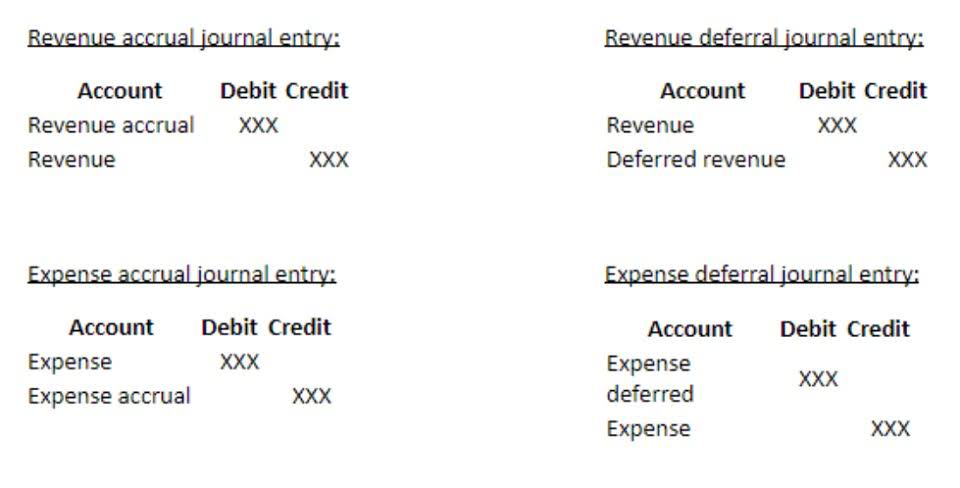
  • I regularly use T-accounts when preparing adjusting entries (accruals and deferrals).
  • If you’re looking to get started in business accounts, one of the best ways to do so is using a T Account template.

Comprehensive Guide to Inventory Accounting

balance t account example

Likewise, accounts with a credit balance, like liabilities, will always increase when another credit is added to the account. Since so many transactions are posted at once, it can be difficult post them all. In order to keep track of transactions, I like to number each journal entry as its debit and credit is added to the T-accounts. This way you can trace each balance back to the journal entry in the general journal if you have any questions later in the accounting cycle. A T-account is used to track specific transactions, while the balance sheet is a summary of a company’s overall financial position. Both statements are important tools in accounting and finance, and they are used to help stakeholders understand a company’s financial health.

  • They are a visual way of recording all transactions that a company makes.
  • The asset Cash also decreases and gets a credit entry of $3,200.
  • The T-account is a quick way to work out the placement of debits/credits before it’s recorded in full detail to help avoid data entry errors.
  • Right now, our Supplies account says we have $3,300 worth of supplies in the supply closet, but this is no longer accurate.
  • The following T-account examples provide an outline of the most common T-accounts.
  • When we introduced debits and credits, you learned about the usefulness of T-accounts as a graphic representation of any account in the general ledger.

Use Baremetrics to track your T accounts

Joe Smith, Drawing is a sub-account of the Joe Smith, Capital account. In this case, we want to reduce equity so we debit the account. The expense account we will use for the salaries we paid is Salaries Expense. When a business owner opens a business, they are turning personal funds into business funds. The business now owes that investment back to the business owner.

Calculating Account Balances

T accounts are one of the primary forms of performing double-entry accounting. In our next lesson we’re going to continue working with T-accounts and focus on a balance t account example very important aspect of them – learning how to balance T-accounts. The nature of each transaction can also be quickly determined. This is the same as the previous transaction, just on the opposite side – we enter the transaction on the credit (right) side of the bank T-account.

  • It is a good idea to familiarize yourself with the type of information companies report each year.
  • Two entries (hence, double entry), one on the left and one on the right, so everything is good.
  • But before transactions are posted to the T-accounts, they are first recorded using special forms known as journals.
  • So, we have our opening balance (debit) of $4,300 and our closing balance (debit) of $19,100.
  • In the journal entry, Utility Expense has a debit balance of $300.
  • The debit is on the left side, and the credit is on the right.

T-Accounting meets business reality

balance t account example

Any transaction a business makes will need to be recorded in the company’s general ledger. The general ledger is divided up into individual accounts which categorise similar transaction types together. It is beneficial if you are looking to complete a journal transaction and see how it will affect the general ledger accounts. This is posted to the Cash T-account on the debit side beneath the January 17 transaction. Accounts Receivable has a credit of $5,500 (from the Jan. 10 transaction).

Understanding Form 990: Transparency and Accountability for Nonprofits

balance t account example

Notice that these are account balances—not column balances. The total difference between the debit and credit columns will be displayed on the bottom of the corresponding side. In other words, an account with a credit balance will have a total on the bottom of the right side of the account. A T-Account is a visual presentation of the journal entries recorded in a general ledger account. This T format graphically depicts the debits on the left side of the T and the credits on the right side. This system allows accountants and bookkeepers to easily https://www.bookstime.com/ track account balances and spot errors in journal entries.

balance t account example

How are the main accounts represented in T accounts?
balance t account example

When a business sells to its customers, it receives cash either “now” or “later”. If cash is being received at the time of the sale, the textbook will specify “received cash” to indicate that. If the textbook says “on account” or “billed”, it means that cash will come later. When cash will be received later the account we use to track what the business will be receiving later is Accounts Receivable. Always refer to the company’s Chart of Accounts for the official name of the expense accounts. In accounting, the name must always match exactly for accuracy and clarity.

CPA vs Accountant: Answering 5 Questions For Future Accounting Professionals

cpa vs accountant

Whether you pursue a career as an accountant or decide to earn a CPA designation will depend on your career goals and the type of work that you ultimately want to do. A CPA designation can help to qualify you for more opportunities, and it may give you a competitive advantage when applying for a position. https://zxpress.ru/article.php?id=17867 However, the CPA designation requires additional schooling and time, and you will also need to budget the time and money to complete your state’s continuing education requirements. CPAs must also hold to ethical standards, acting on behalf of their client’s best interests and remaining impartial.

cpa vs accountant

Red Flags That Signal It’s Time to Switch Your Small Business Accountant

The IFAC’s International Code of Ethics for Professional Accountants provides a comprehensive framework that aims to ensure consistency in ethical practices across borders. This harmonization is particularly important in today’s globalized economy, where multinational corporations operate in multiple jurisdictions. By promoting a unified approach to ethics, international organizations help enhance the reliability and comparability of financial information worldwide. In California, for example, you can sit for the CPA exam after completing 120 credit hours as long as you meet subject-matter requirements, but need 150 credit hours to get your CPA license. But many entry-level accountants start even lower, making about $33,099 a year, data from Indeed show. For instance, in Nevada, you’ll need a bachelor’s or higher degree from an accredited institution.

How to Understand a Balance Sheet for Small Business

Typically, accountants need at least a bachelor’s degree in accounting or a related field, and many pursue professional certifications such as CPA to enhance their expertise and credibility in the field. In addition to education and certifications, accountants need a solid understanding of math, strong organizational skills, an analytical mindset, and proficiency with accounting software. Accountants manage financial records, prepare tax returns, audit records, and offer financial planning for http://www.globustour.ru/search/topics/page9/?qq=2.htm both individuals and organizations. CPAs are accountants who have met rigorous licensing requirements and possess advanced expertise. Both roles involve providing financial insights, guiding strategic decisions, and ensuring financial transparency for individuals, small businesses, corporations, and other organizations. A certified public accountant (CPA) is an accounting professional who has met certain education, exam, and experience requirements for licensure by a state board of accountancy.

cpa vs accountant

How Much Do Outsourced Accounting Services Cost?

  • Profit and prosper with the best of expert advice on investing, taxes, retirement, personal finance and more – straight to your e-mail.
  • As one of the leading CPA firms in Texas, including Austin CPA firms, we provide expert financial services not only locally but also nationwide.
  • The terms CPA, or Certified Public Accountant, and accountant are often used interchangeably, but in reality, there are significant differences between them.
  • However, while you may run the reports, do you understand what they’re telling you?
  • To become an accountant, a bachelor’s degree in finance, business management, accounting, or a related field is required.

Some states will accept other experiences, such as working in government or industry, but you will generally need more years of such experience. As an aspiring CPA, you might want to consider an online accounting degree program, http://introweb.ru/inews/soft/?tag=2575 which offers convenience and flexibility, especially when working full time while going to school. You might like to consider the Online Master’s of Accounting (iMSA), offered by the University of Illinois Urbana-Champaign.

Another distinction is that accountants who are not CPAs would not be able to represent their clients in matters relating to IRS audits. For everyday tasks like keeping track of your finances, creating financial reports, or handling basic tax preparation, an accountant is often the right choice. But if you need help with more complex issues like tax planning, meeting regulatory requirements, CPA individual tax preparation, or getting advice for growing your business, a CPA can offer the expertise you need. When it comes to handling everyday tasks like bookkeeping and financial reporting, an accountant may be the right fit. But if you’re dealing with more complex issues — like starting a new business, facing an audit, or needing strategic tax advice — a CPA is your best bet. With their advanced qualifications and ability to represent you legally, they offer a level of protection and expertise that accountants simply can’t.

  • This is particularly important when you need to have audited financial statements prepared or reports filed with the Securities and Exchange Commission (SEC), which is a requirement for all publicly held companies.
  • While it may seem that people use these terms interchangeably, there are distinctions between these professionals.
  • Accountants may earn around $61,480 per year, while senior CPAs earn an average of $92,795 annually.
  • For example, if your ending utility expense account in the general ledger is higher or lower than expected, it’s the accountant’s job to figure out why.
  • Other countries have equivalent certifications, notably the chartered accountant (CA) designation created in Scotland and now used in many countries.

How to Understand Your Income Statement as a Small Business

Challenges of Restaurant365

How to Become a Financial Manager: A Career Guide

cpa vs accountant